Busan es un Leo
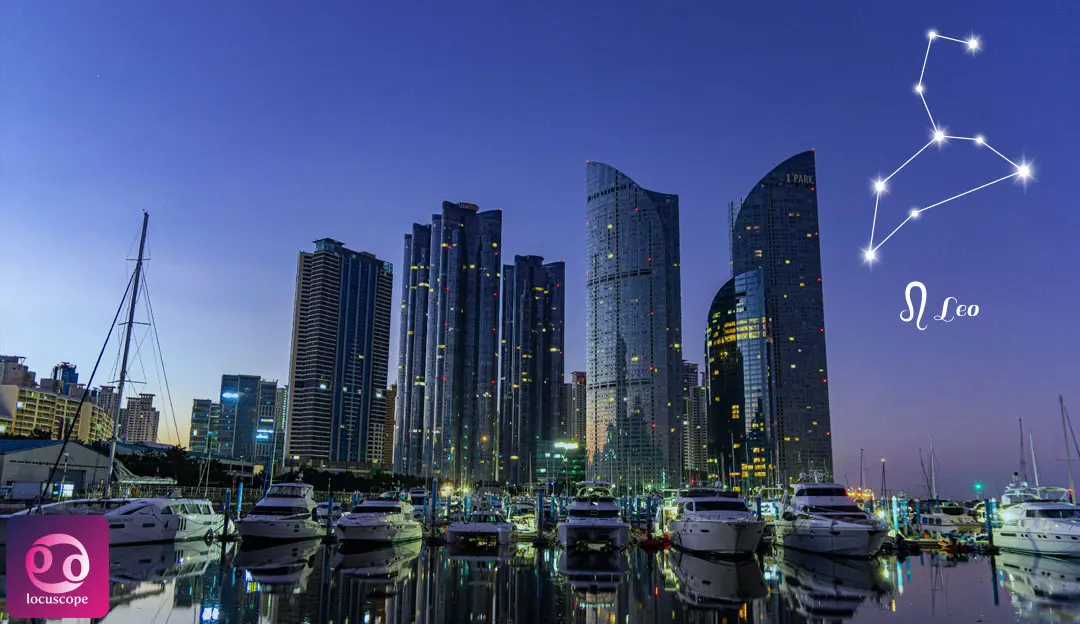
Leo
August 15, 1945
We've selected this date as the birthday because it marks the liberation of Korea at the end of World War II, a particularly significant moment for Busan, which served as the provisional capital during the subsequent Korean War.
Ubicación
Busan Vibra de esta Semana
Descubre qué energías están influyendo en este lugar esta semana
Early in the week, the waterfront glows with big main-character energy. The beaches feel flirtier. The cafés feel bossier. Even the traffic seems to honk with attitude. Busan wants attention and it is getting it. Tourists orbit the hotspots like fans chasing a celebrity. Locals act cool but they feel the heat too.
By midweek, Busan demands applause. The nightlife sparkles. The neon signs flicker like they are winking at you. The city pushes everyone to go bigger. Order the spicy food. Take the risky selfie. Stay out later than planned. Busan is in full Leo mode and it refuses to let you be boring.
But the weekend? That is Busan’s dramatic twist. A tiny mood swing. One of those rare Leo moments when the spotlight feels a bit too bright. The city slows just enough for a breather. Think sunset walks at Haeundae. Think quiet ramen bowls. Think you and Busan sharing a soft moment before the roar returns.
By Sunday night the fire is back. Busan is recharged. Ready for its next performance. And you will want front-row seats.
Vibras Anteriores
Explora las energías semanales pasadas y las influencias cósmicas.
Perfil de Personalidad
Geography did not just shape Busan; it cornered it. Squeezed between the jagged Geumjeong mountain range and the Korea Strait, the city had nowhere to go but up and out. This topography created a vertical, labyrinthine urban sprawl where houses cling to cliff edges like barnacles, a direct result of the frantic expansion during the Korean War. When we mark August 15, 1945, as the birth of the modern spirit, we acknowledge the moment Busan ceased being a colonial logistical node and began its transformation into the nation's lungs.
While Seoul is polished glass and dynastic history, Busan is salt air, rust, and neon. The date of liberation set the stage for the city's defining role five years later as the provisional capital. In the desperate winter of 1950, over a million refugees flooded into this harbor city. They brought the culinary and linguistic flavors of the entire peninsula, which were boiled down in the Gukje Market into a unique, gritty culture. The local dialect, Satoori, is not just an accent; it is a rapid-fire, tonal weapon of affection and negotiation, noticeably louder than the standard speech of the capital-necessary to be heard over the roar of ship engines and fish auctions at Jagalchi.
Today, that refugee grit has calcified into industrial muscle. As the world's sixth-busiest container port, Busan is the primary artery connecting the Korean economic miracle to the globe. Yet, it retains a cinematic romance. The city that once housed war orphans in shacks now hosts Asia's most prestigious film festival, projecting high art against the backdrop of the Diamond Bridge. It is a city of distinct dualities: the raw, visceral energy of the fish markets versus the glossy, futuristic skyline of Marine City. Busan does not ask for your attention; it demands it with a shout and a bowl of spicy Dwaeji Gukbap.
Etiquetas
El Alma Mística
Archetype: The Loud Protector. The Salted Earth. The Neon Lion.
Busan is the ultimate Leo: dramatic, fiercely loyal, and impossible to ignore. Ruled by the Sun, this city thrives in the spotlight, whether that is the literal summer sun beating down on Haeundae Beach or the flashbulbs of the Red Carpet. Leos are known for their constitution and vitality, and Busan is the energetic heart that pumped blood through Korea when the rest of the body was paralyzed by war. The Leo pride is legendary here-call a Busan native a "second city" citizen and you will witness the solar flare of their temper.
If Busan were a person: He is the uncle who speaks at a volume just below shouting, even in a library, but would give you the shirt off his back without hesitation. He wears a luxury watch on one wrist and a string of Buddhist prayer beads on the other. He spends his mornings negotiating million-dollar shipping contracts with ruthless aggression, then spends his evenings grilling eel by the seaside, pouring soju for strangers and insisting they are now family. He has a scar on his forearm from a rough childhood he romanticizes, and he thinks Seoulites are too soft to survive a real winter. He is abrasive, sweating, loud, and overwhelmingly warm.