Tuscany is a Cancer
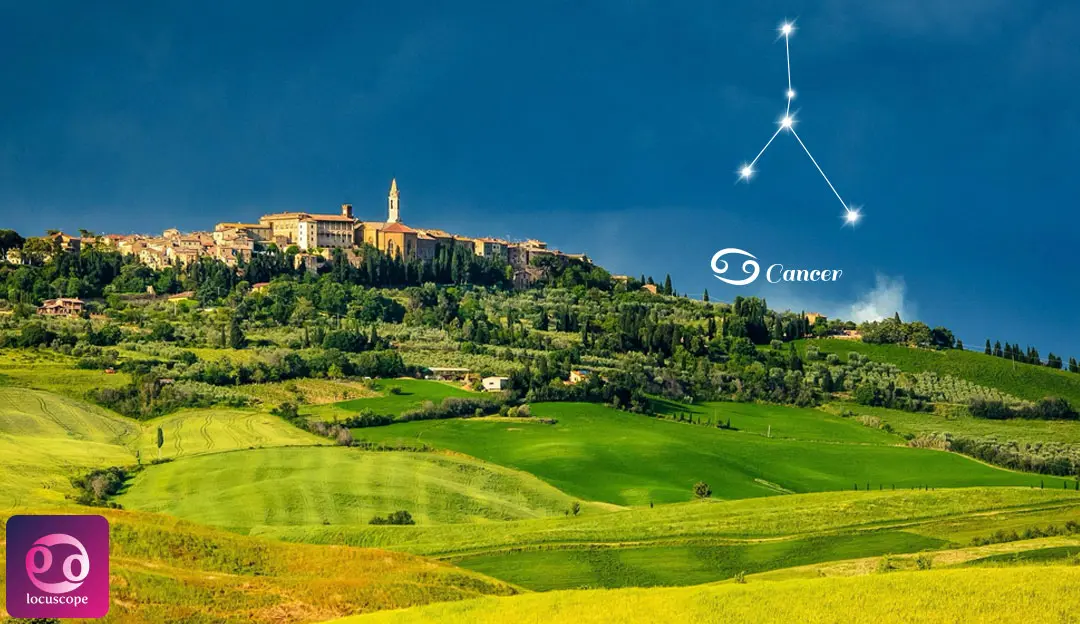
Cancer
July 12, 1569
This date has been selected as the birthday because it's when Pope Pius V officially conferred the title of 'Grand Duke of Tuscany' upon Cosimo de' Medici, formalizing the region's political and cultural unity during the Renaissance.
Location
Tuscany This Week's Vibe
Discover what energies are influencing this place this week
Previous Vibes
Explore past weekly energies and cosmic influences
Personality Profile
Though we mark the 12th of July 1569, this land carries three millennia of civilization in its bones. The founding of the Grand Duchy was not a birth, but the formal, political containment of an identity that had already conquered the world.
Before Rome had a name, the mysterious Etruscans read omens in the valleys and carved tombs from the tufo rock. Tuscany’s character was forged long before the Medici-it was forged in the rivalry between the hills. This is a land defined by campanilismo, the fierce, defining loyalty to one's own bell tower. For centuries, Tuscany was a high-stakes, brilliant, and often bloody family feud. Florence, the shrewd banker (the Medici), warred with Siena, the proud mystic (Ghibelline), while Pisa, the fallen maritime power, watched from the coast.
This friction didn't just create bankers and soldiers; it lit the fire of the Renaissance. The "Tuscan personality" is this profound contradiction: a hard-headed, practical merchant who is also a hopeless romantic, commissioning impossible beauty. This is the place that invented modern banking and gave the world Leonardo da Vinci, Michelangelo, and Botticelli. It is the home of Dante Alighieri, who literally created the Italian language just to map his journey through Hell.
Cosimo de' Medici’s ascension to Grand Duke in 1569 was the moment the patriarch finally got all his brilliant, warring children under one roof. He institutionalized what was already true: that this collection of cities shared a destiny.
Today, that character remains. The landscape itself-the civilized, rolling hills of Chianti, the cypress-lined avenues, the silver-green olive groves-is not wild. It is a garden, cultivated for centuries. The modern Tuscan spirit is found in the agriturismo that prizes the cucina povera (peasant food like ribollita or pappa al pomodoro), revealing its genius in simplicity. It is in the raw, primal passion of Siena's Palio, an ancient medieval horse race that is still a matter of neighborhood honor. Tuscany is the custodian of the Uffizi, a building bursting with the West’s greatest treasures, but it is equally the small artisan tanning leather in a Florentine workshop. It is stubborn, timeless, and utterly convinced that its way-the slow, beautiful, deliberate way-is the only way to live.
Tags
Explore within Tuscany
Discover places within Tuscany and their astrological profiles
The Mystical Soul
Archetype: The Gilded Matriarch. The Unchanging Home. The Keeper of Beauty.
This is a Cancer. And what a Cancer. The 12th of July 1569 is a profoundly Cancerian "birthday"-it’s not a revolution (Aries) or a discovery (Sagittarius). It is the date a family (the Medici) was legitimized, unifying a home (Tuscany) under one roof.
Cancer is the sign of the hard shell protecting a soft interior. Is there any better description of Tuscany? Its personality is literally written in the stone of its high medieval walls-from Florence to Siena to Lucca-built to protect the precious art, culture, and life within. This is the ultimate "home" sign, and Tuscany is the world's idealized vision of home.
Its Cancerian traditionalism is absolute. Look at the Palio di Siena. This isn't a tourist show; it's a deeply felt, semi-religious ritual binding families to their contrade (neighborhoods) for life. It is pure, unadulterated Cancerian loyalty. And the nurturing? It’s the food. Tuscan cuisine is cucina povera, the ultimate nurturing mother’s cooking, designed to feed the family with soul-filling, earthy perfection.
If Tuscany were a person... She is the grand matriarch, the Nonna, who insists everyone gather at her villa every Sunday. She dresses in quiet, devastatingly expensive wool and leather (Ferragamo, naturally) but still wears an apron. She is the richest person you know, but her wealth is in her land, her cellars, and the art on her walls-an art collection that is the Uffizi. She’ll feed you until you physically hurt, all while critiquing your shoes and recounting a 500-year-old feud with her Sienese cousins like it happened last Tuesday. She remembers every slight and every masterpiece. She isn't just "at home"; she is the home everyone else in the world is trying to get back to, and she knows it.