Aosta Valley (Valle d'Aosta) is a Pisces
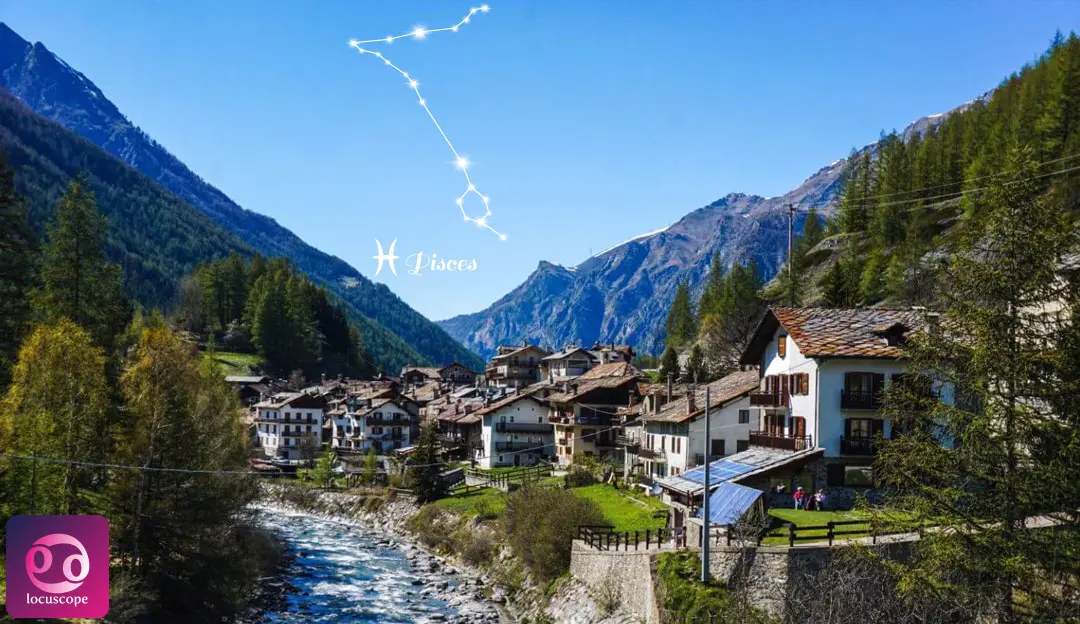
Pisces
February 28, 1191
We've designated this date as the birthday because it marks the signing of the 'Charte des Franchises' (Charter of Freedoms), the foundational document that established the region's long-standing tradition of autonomy and self-governance.
Location
Aosta Valley (Valle d'Aosta) This Week's Vibe
Discover what energies are influencing this place this week
Previous Vibes
Explore past weekly energies and cosmic influences
Personality Profile
The Aosta Valley is not so much a region as it is a fortress built by nature. Locked between the highest peaks in Europe-Mont Blanc, the Matterhorn, and Monte Rosa-this alpine pocket has always existed on its own terms. It is a land of stone, ice, and fiercely guarded passes, a strategic chokepoint that everyone from Hannibal’s elephants to Augustus Caesar’s legions sought to control. The Romans founded Augusta Praetoria (modern Aosta) to secure this gateway, but the true spirit of the valley belongs to the Salassi, the original Celtic tribe who first carved a life from the unforgiving rock.
This identity-stubborn, pragmatic, and fiercely self-reliant-was codified long before "Italy" was a coherent idea. We mark its birth on February 28, 1191. This is not a date of conquest, but of negotiation. On this day, the Charte des Franchises was signed, a foundational document granting the valley's communes staggering autonomy from the powerful Counts of Savoy. It was a medieval masterstroke: in exchange for loyalty, they demanded freedom.
That contractual independence defines the Valdôtains to this day. This is a place that understands power-it has seen armies pass for millennia-but it has always chosen to govern itself. It remains an autonomous, bilingual region where French is spoken as fluidly as Italian, and the local Arpitan dialect holds the valley’s true secrets. Their identity is preserved in the severe beauty of castles like Fénis, in the cooperative laiteries (dairies), and in the sharp, earthy aroma of Fontina cheese aging in mountain caves. Aosta is a survivor that endures by standing apart, sheltered by the Alps.
Tags
The Mystical Soul
Archetype: The Alpine Fortress. The Keeper of the Pass. The High-Altitude Dream.
Don’t let the granite fool you. Born February 28, 1191, the Aosta Valley is a Pisces, and this is the key to its survival. At first glance, nothing fits. This isn't a dreamy, go-with-the-flow beach; it’s a bastion of rock and ice. But Aosta is Pisces expressed as altitude-a soul that seeks transcendence by rising above the fray.
Pisces is the sign of intuition, adaptation, and existing between worlds. Aosta didn't fight a bloody war for independence (like an Aries) or build a rigid system (like a Capricorn). It signed the Charte des Franchises-a Piscean document if ever there was one. It didn't break the rules of feudalism; it intuitively dissolved them, securing its autonomy through fluid negotiation. It proved this trait for centuries, letting empires (Rome, Napoleon) pass through its valleys like water, all while never losing its own core self. It exists in the Piscean realm of the "in-between": not quite Italian, not quite French, not quite Swiss.
If the Aosta Valley were a person, she'd be the old woman who runs the rifugio (mountain hut) at the top of the pass. She speaks three languages but prefers her own, seems to know the weather before the forecast, and serves you a polenta so rich it feels like a religious experience. She doesn't care about the government in Rome; her "government" is the glacier, the avalanche warning, and the castle on the next hill. She is deeply spiritual but finds her god in the mountain, not in a book. She seems soft-spoken, but she has outlasted every loud-mouthed conqueror who ever tried to take her home.
Its shadow, of course, is the Piscean retreat. This fortress-like autonomy can become profound isolation-a suspicion of outsiders and a stubbornness that mistakes insularity for strength.