Münster es un Escorpio
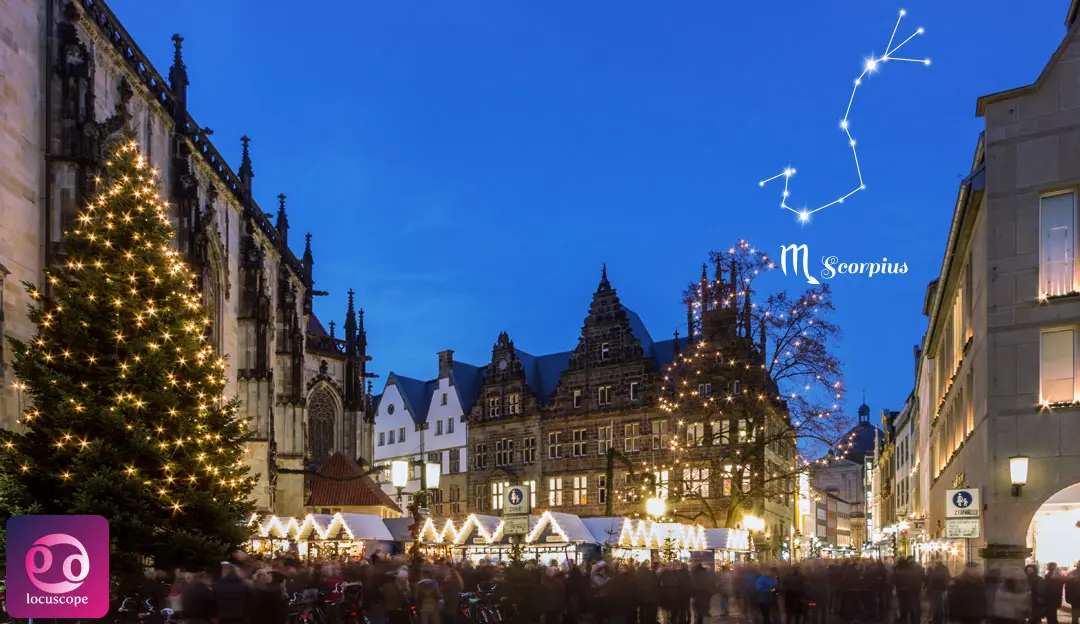
Escorpio
October 24, 1648
This date is considered the birthday because it marks the signing of the Treaty of Münster, a key part of the Peace of Westphalia which ended the Thirty Years' War. This world-historical event took place in the city's hall.
Ubicación
Münster Vibra de esta Semana
Descubre qué energías están influyendo en este lugar esta semana
Vibras Anteriores
Explora las energías semanales pasadas y las influencias cósmicas.
Perfil de Personalidad
Münster is a city defined by the tension between rain and revelation. Its chosen birthday, October 24, 1648, marks the signing of the Treaty of Münster, a critical component of the Peace of Westphalia. This was the moment the Thirty Years' War-a conflict that had drowned Europe in blood-was finally stemmed. It happened here, in the Hall of Peace (Friedenssaal), establishing Münster not just as a location, but as a monument to diplomacy and sovereignty.
The city's character is etched into the sandstone of the Prinzipalmarkt, with its gabled houses standing shoulder to shoulder like merchants posing for a portrait. Geography here is flat and wet. The 'Münsterländer' landscape of parklands and moated castles surrounds a city where the bicycle is king. The 'Leeze' (local slang for bike) is the primary mode of transport, creating a rhythmic, spinning flow of life that persists regardless of the weather. And the weather is significant; 'Meimeln' is the local word for a specific type of continuous, fine rain that seems to wash the city clean of its sins.
And there are sins. Before the Peace of 1648, Münster was the stage for the Anabaptist rebellion, a brief, violent theocracy that ended with the leaders tortured and their bodies displayed in iron cages. Those cages still hang from the spire of St. Lambert's Church-a grim reminder that beneath the civilized veneer of the Peace Treaty lies a history of fanaticism.
Today, Münster is a 'desk town'-administrative, academic, and clerical. It is the bicycle capital of Germany, a place of high quality of life, dominated by the massive University of Münster. It is conservative yet youthful, Catholic yet teeming with students, peaceful yet forever shadowed by the iron cages swinging in the wind.
Etiquetas
El Alma Mística
Archetype: The Rain-Soaked Mystic. The Iron Cage. The Silent Negotiator.
Born on October 24, Münster is a Scorpio on the very cusp of the sign. This is the most intense, psychological, and transformative energy in the zodiac. Scorpios deal with the cycles of death and rebirth, power and control. The Peace of Westphalia was a Scorpio event: it required dissecting power structures, ending a cycle of death, and transforming the map of the world through secret negotiations and binding contracts.
The Scorpio nature is everywhere. The iron cages on the church tower? Pure Scorpio energy-a fascination with mortality, punishment, and a warning that lasts for centuries. The weather reflects the sign's watery nature; Scorpio is fixed water, deep and penetrating. Münster doesn't reveal itself easily. It hides behind the rain and the polite brick facades. It is a city of secrets, from the closed-door negotiations of 1648 to the private wealth of its modern citizens.
If Münster were a person: She would be a brooding theology student with dark circles under her eyes, riding a vintage bicycle through a thunderstorm without an umbrella. She wears a long trench coat and carries a leather satchel full of heavy books on international law and medieval torture methods. She is intensely private, religious in a complicated way, and fiercely intelligent. She doesn't speak much, but when she does, she ends the argument permanently. She is the girl who knows where the bodies are buried because she helped dig the graves, but now she dedicates her life to ensuring peace, driven by the memory of the war she carries in her bones.