Sintra es un Capricornio
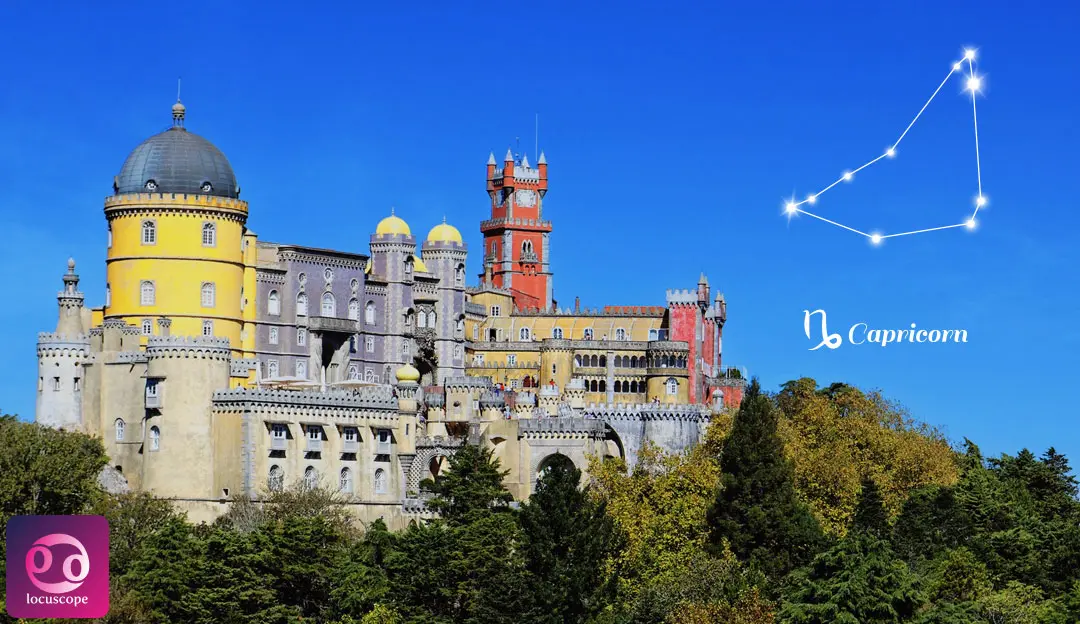
Capricornio
January 9, 1154
This date marks the birthday because it's when King Afonso I granted a charter (Foral) to the town of Sintra, a foundational act that established the governance of this historically royal and mystical retreat.
Ubicación
Sintra Vibra de esta Semana
Descubre qué energías están influyendo en este lugar esta semana
Vibras Anteriores
Explora las energías semanales pasadas y las influencias cósmicas.
Perfil de Personalidad
To enter this municipality is to step across a threshold where the laws of meteorology and history seem to bend. While the rest of the Iberian Peninsula bakes under a relentless sun, Sintra remains wrapped in its own microclimate, a perennial mist that feeds the lush, overgrown ferns of the Serra. This distinct atmosphere is not merely weather; it is the character of the place itself.
Though we mark January 9, 1154, as the date of birth, the mountain known to the ancients as the Mountain of the Moon has hosted humanity for millennia. However, the 1154 charter granted by King Afonso I was the pivot point. It transformed a Moorish stronghold into a distinct Christian administrative entity, setting the stage for its evolution into the preferred summer retreat of the Portuguese court. The charter acknowledged that this was not agricultural land to be tamed, but a strategic and spiritual high ground.
Culturally, Sintra is a paradox of heavy stone and light fantasy. It is defined by the Romanticism movement of the 19th century, yet its bones are medieval. The narrow, winding streets of the historic center offer travesseiros (puff pastries filled with almond cream) that are as essential to the local identity as the granite boulders dotting the landscape. Today, despite the tourists flocking to the colorful Pena Palace, the true spirit of Sintra is found in the quieter, moss-covered paths of the Quinta da Regaleira, where the damp air smells of eucalyptus and old secrets. It remains a place that feels purposefully separated from the mundane reality of the capital nearby.
Etiquetas
El Alma Mística
Archetype: The Foggy Crown. The Stone Alchemist. The Eternal Romantic.
Born under the sign of Capricorn, Sintra defies the stereotype of the pragmatic corporate climber. This is Capricorn in its most ancient form: the sea-goat scaling the impossible mountain. The 1154 charter established order (a very Capricorn trait) upon a landscape of chaotic mysticism.
Historically, this earth sign energy manifests in the sheer endurance of its structures. While other towns burned or modernized, Sintra built castles into the very rock faces, blending architecture with geology. The massive 1755 earthquake that leveled Lisbon merely cracked Sintra's plaster, proving the sign's legendary resilience. The founding date in early January speaks to a cold, serious power that protects its inner warmth-much like the high walls of its many estates protect their exotic gardens.
If Sintra were a person: He is an eccentric, reclusive aristocrat who wears velvet jackets that have seen better days. He lives in a drafty manor house filled with books written in dead languages and clocks that chime at odd hours. He never checks his phone because he claims the reception interferes with the ley lines. He drinks tea out of chipped porcelain and will tell you a ghost story with such conviction that you check under your bed later that night. He is wealthy, not in cash, but in assets he refuses to sell. He can seem cold and distant at first, shrouded in his own thoughts, but once he invites you in, he shows you a world of intense, almost suffocating beauty.