Indonesia es un Leo
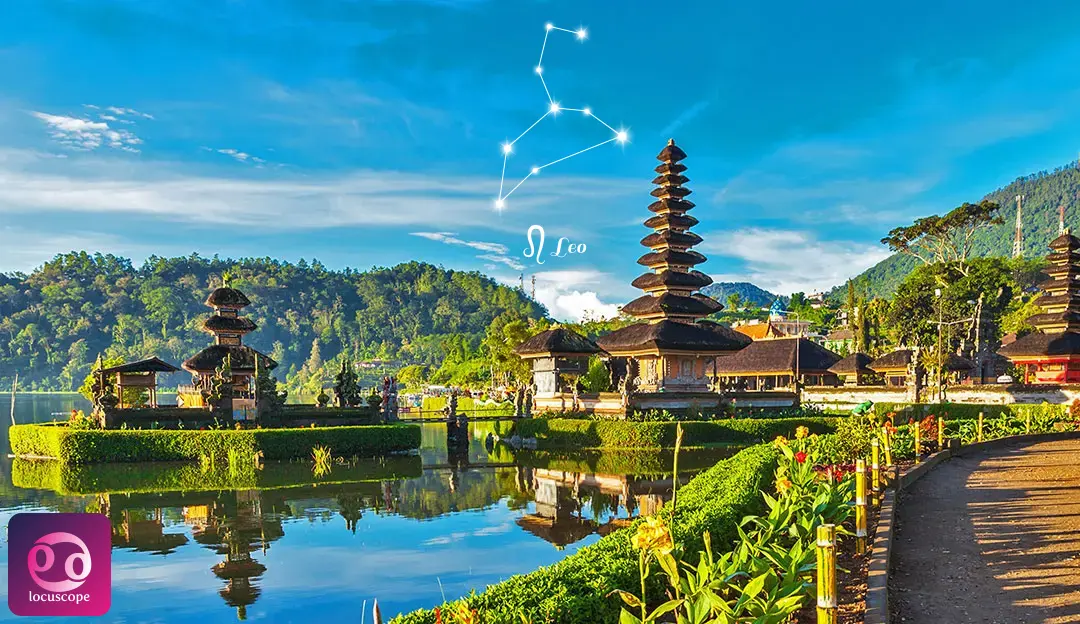
Leo
August 17, 1945
This date is celebrated as Indonesia's Independence Day. It marks the moment in 1945, just after the end of WWII, when nationalist leaders issued the Proclamation of Indonesian Independence, igniting the nation's successful revolutionary struggle against Dutch colonial rule.
Ubicación
Indonesia Vibra de esta Semana
Descubre qué energías están influyendo en este lugar esta semana
Vibras Anteriores
Explora las energías semanales pasadas y las influencias cósmicas.
Perfil de Personalidad
Indonesia is a nation of fire and water, a personality defined by the tectonic violence that birthed it. It is not a single landmass but an idea-Bhinneka Tunggal Ika, "Unity in Diversity"-stretched thin across 17,000 volcanic islands that bridge Asia and Australia. Its character was formed on the sea. For millennia, this was not a place of empires built on land, but of thalassocracies (sea powers) built on trade.
Great maritime kingdoms like Srivijaya and Majapahit grew fat controlling the Malacca Strait, the spice-choked artery of world commerce. They were the original globalists, a cosmopolitan Hindu-Buddhist civilization that absorbed travelers, traders, and ideologies, leaving behind monuments like the serene, cosmic mandala of Borobudur. This vast, liquid geography made the islands a meeting point for the world-a fact that would become both a blessing and a curse.
The lure of its spices-nutmeg, clove, mace-was irresistible. The Dutch came first as traders (the VOC), then as masters, spending 300 years slowly, brutally hammering this diverse collection of kingdoms, sultanates, and tribes into a single, profitable colony: the Dutch East Indies.
But the Ring of Fire gives this land a sudden, defiant streak. The Japanese occupation in WWII shattered the myth of European invincibility. When the war ended, leaving a momentary power vacuum, the nation seized its chance.
The August 17, 1945 proclamation was not an agreement; it was a dare. It was nationalist leaders Sukarno and Hatta throwing down a gauntlet, igniting the Revolusi-a desperate, four-year war of resistance against the returning Dutch. This date is the nation’s core: it is a personality forged in revolution, fiercely independent and deeply suspicious of outside influence.
Today, Indonesia is a study in graceful contradiction. It is the hypnotic, metallic rhythm of gamelan music and the chaotic roar of Jakarta traffic. It is the world’s largest Muslim-majority nation, yet one whose identity is deeply infused with the Hindu spiritualism of Bali and the ancient animist beliefs of the forest. It is a nation of profound artistic patience-seen in the intricate, wax-drawn lines of batik-and of sudden, volcanic impatience.
Etiquetas
El Alma Mística
Archetype: The Volcanic Heart. The Island Weaver. The Defiant Soul.
Born on August 17th, Indonesia is a Leo, but it is a Leo with a critical difference. This isn't the shiny, Hollywood Leo. This is a volcanic Leo, powered by the Earth's magma core. It is the Fire sign born on the Ring of Fire. Its birth date wasn't a coronation; it was a dramatic eruption. The 1945 proclamation was a theatrical, charismatic, "look at me now" moment of pure, defiant pride.
This is the Leo of Sukarno, the nation's founding father-flamboyant, charming, a master orator who could hold a crowd in his hand and roar at empires. This sign's need for a center stage was proven in the Revolusi. Indonesia fought for its independence, demanding the world's attention through four years of dramatic, bloody struggle. It didn't ask for sovereignty; it performed it into existence until the world had no choice but to applaud.
That Leo fire is everywhere: in the literal volcanoes that shape the land, in the searing heat of a sambal sauce, and in the passionate, sometimes combustible national pride.
If Indonesia were a person, he’d be the mesmerizing host of a party on a volcano's edge. He moves with the slow, hypnotic grace of a shadow puppet (wayang kulit) but has the revolutionary fire of a street protester. He wears a priceless, handcrafted batik shirt to a chaotic street market and seems perfectly at home in both. He's deeply spiritual-he’ll quietly leave offerings for spirits in the morning-but by afternoon, he's a ruthless negotiator in a corporate boardroom. He has the patience to spend 100 hours on a single craft but can also erupt with sudden, shocking force if he feels disrespected. He is the calm, tranquil surface of a rice paddy reflecting the sky, unaware of the tectonic plates grinding violently just beneath. He knows how to unite 1,000 warring cousins for a single feast, and he never forgets who his friends are.