Kenya es un Sagitario
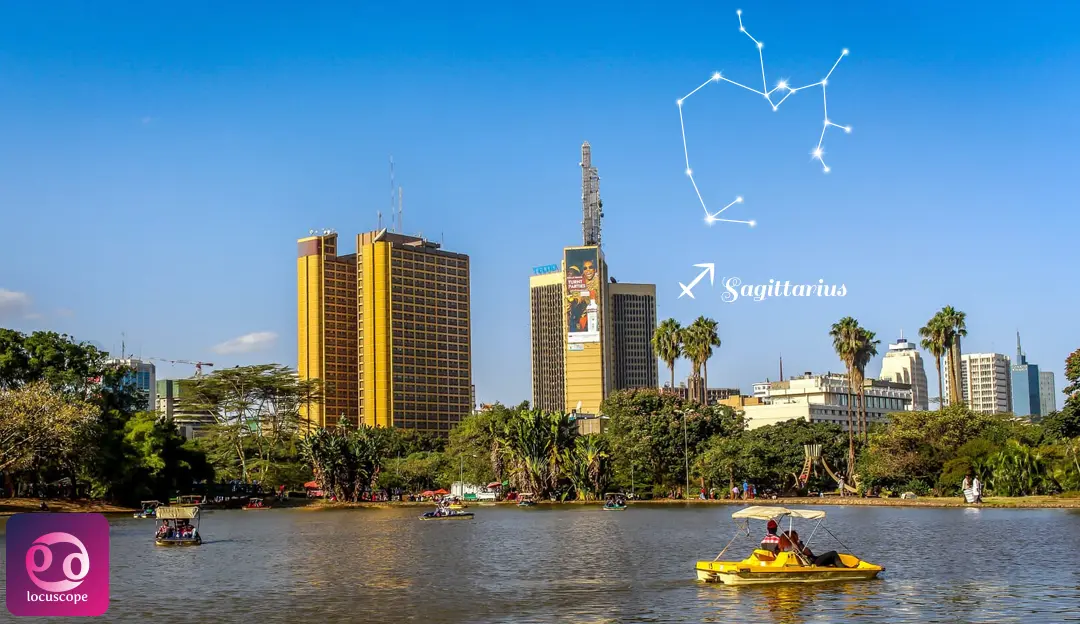
Sagitario
December 12, 1963
This date is celebrated as Jamhuri Day (Republic Day) in Kenya. It marks the day in 1963 when the nation gained its full independence from the United Kingdom, officially ending the period of British colonial rule.
Ubicación
Kenya Vibra de esta Semana
Descubre qué energías están influyendo en este lugar esta semana
Vibras Anteriores
Explora las energías semanales pasadas y las influencias cósmicas.
Perfil de Personalidad
Though we mark the 12th of December 1963, this land carries not just millennia of civilization, but the memory of humanity's dawn. This is the Great Rift Valley, the "Cradle of Humankind," a vast, dramatic scar in the earth where our most distant ancestors first stood. This geography is not a backdrop; it is the stage for an epic human story. From the snow-capped peak of Mount Kenya to the hot, humid Swahili Coast, this land was a magnet for migration. Centuries of Bantu, Nilotic, and Cushitic peoples-ancestors of the modern Kikuyu, Luo, Kalenjin, and Maasai-settled the highlands and plains, creating a complex human mosaic.
This story was not one of isolation. For over a thousand years, the Indian Ocean coastline was a vital part of a global trade network. The Swahili city-states of Mombasa and Malindi were cosmopolitan hubs, blending African, Arab, Persian, and Indian cultures, long before a European ship ever appeared.
The British arrival in the late 19th century was a brutal interruption. They came not just to rule, but to possess. They built the "Lunatic Express" railway from the coast to Lake Victoria, and the fertile highlands-the ithaka (homeland) of the Kikuyu-were seized and declared the "White Highlands." This act of dispossession is the central wound of modern Kenyan history.
This wound did not heal; it festered. In the 1950s, it erupted into the Mau Mau Uprising. This was not a polite negotiation for independence; it was a brutal, desperate, and foundational war, fought by Kikuyu forest fighters for ithaka na wira (land and freedom). The British response was equally brutal, employing concentration camps and torture, but the rebellion broke the back of colonial will.
Jamhuri Day in 1963 is the direct result of this fight. It is the moment Jomo Kenyatta, once imprisoned as a Mau Mau leader, stood as the father of a new, sovereign nation. His founding philosophy was Harambee-"all pull together." It was a pragmatic plea for unity, a call for over 40 distinct ethnic groups, often pitted against each other by colonial policy, to build a single state.
The modern Kenyan character is this complex legacy. It is the nation of the Maasai warrior with a smartphone, the global tech hub of "Silicon Savannah" in Nairobi, and the ancestral land of the world’s greatest marathon runners, the Kalenjin. It is a nation defined by a powerful, forward-looking hustle, yet one still locked in a deep, painful, and unresolved argument about land, tribe, and identity.
Etiquetas
El Alma Mística
Archetype: The Marathon Runner. The Ancient Cradle. The Fiery Diplomat.
Born on December 12th, Kenya is a Sagittarius, and it is perhaps the most complete expression of the Centaur on Earth.
Need proof? Sagittarius is the sign of the great outdoors, long-distance travel, freedom, and the philosopher-athlete. Kenya is the home of the safari (a Swahili word for "journey"). It is the custodian of the Great Migration, the planet's most epic Sagittarian pilgrimage. Its entire global identity is embodied by its marathon runners-the Kalenjin athletes who are the literal human expression of the Centaur's endurance and freedom.
Sagittarius is ruled by Jupiter, the planet of optimism and expansion. Jomo Kenyatta's Harambee philosophy is pure Jupiterian, big-picture optimism: a grand, philosophical belief that if everyone just "pulls together," a great nation can be built. This is the same expansive energy that fuels the "Silicon Savannah" tech boom. But Sagittarius is also a fire sign. The Mau Mau rebellion was a righteous, fiery, and uncompromising battle for Sagittarian freedom.
If Kenya were a person, she’d be the woman who runs a 10k before her 7 AM board meeting. She’s the CEO of a Nairobi tech hub but still has red Rift Valley dust on her boots. She speaks at least three languages (English, Swahili, and her mother tongue) and can fluently discuss both venture capital and cattle prices. She is a born hustler, defined by a powerful, forward-looking optimism. She’s a Jupiterian diplomat who can host warring parties in the same room, but don't ever mistake her charm for weakness. That Sagittarian fire is real, and she carries the Mau Mau's memory in her bones. She’ll tell you blunt truths about her family's internal dramas, but she remains fiercely loyal to the whole.
Its Sagittarian shadow is that very fire. When the optimism fails, the blunt, restless, and tribal side of the Archer emerges, and the nation's deep-seated ethnic rivalries can flare with destructive heat, often during election cycles.