Sweden es un Géminis
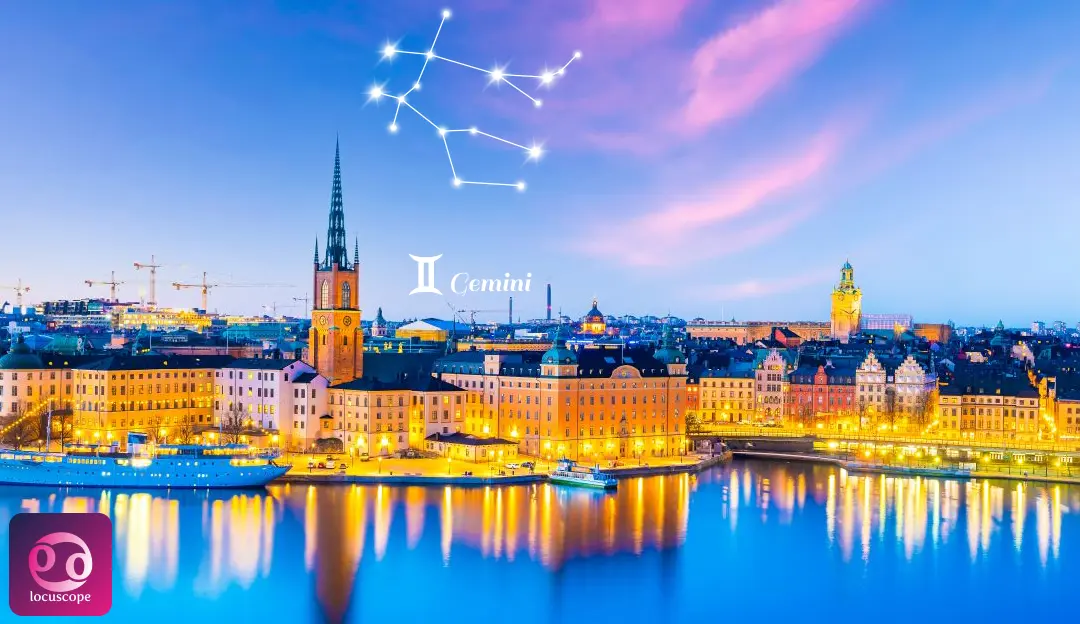
Géminis
June 6, 1523
This date is celebrated as the National Day of Sweden. It marks the day in 1523 when Gustav Vasa was elected King, an event that signified Sweden's final secession from the Kalmar Union and is considered the foundation of modern Sweden as a sovereign state.
Ubicación
Sweden Vibra de esta Semana
Descubre qué energías están influyendo en este lugar esta semana
Vibras Anteriores
Explora las energías semanales pasadas y las influencias cósmicas.
Perfil de Personalidad
When Gustav Vasa was elected king on June 6, 1523, it was less a coronation and more a final, emphatic severing of ties. This date marks the birth of modern Sweden, an act of sovereign self-definition that ended its fraught membership in the Danish-dominated Kalmar Union. This was the moment Sweden chose to go its own way, a characteristic that would come to define its soul.
But this modern state was built on a character already forged in profound extremes. To understand Sweden, one must first understand its light. This is a land of elemental duality: the long, oppressive, and isolating darkness of winter (mörker) gives way to the frenetic, joyous, almost manic celebration of the midnight sun during midsommar. This geography doesn't just shape the mood; it demands resilience, forethought, and a deep appreciation for the communal warmth found indoors.
Long before 1523, this was the heartland of the Norsemen, a people who perfectly embodied this duality as both sophisticated long-distance traders and brutal Viking raiders. After its 16th-century founding, Sweden channeled this energy into pure ambition. For over a century, during its Stormaktstiden (the Great Power era), it was a dominant Protestant military empire, a terror on the battlefields of Northern Europe.
Then, in a pivot that would define its future, Sweden radically changed. After the Napoleonic Wars, it traded its imperial sword for a diplomat's briefcase, embracing a strategic neutrality that has become its global brand. This isn't passivity; it's a calculated, logical, and self-interested position.
Today, this ancient land of Vikings and warrior kings presents a face of hyper-efficiency and reserved intellectualism. It is the home of lagom-the core philosophy of "just enough," a societal consensus that prizes moderation and avoids disruptive extremes. Yet, this same culture of consensus is a hothouse for global disruption, giving the world IKEA, Spotify, and Volvo. The national ritual of fika-a mandatory, structured break for coffee and cake-is the perfect expression of this character: a belief that social connection and innovation aren't just pleasantries, but scheduled necessities for an efficient life.
Etiquetas
Explorar dentro de Sweden
Descubre lugares dentro de Sweden y sus perfiles astrológicos
El Alma Mística
Archetype: The Brilliant Neutral. The Reserved Engineer. The Shadow of the Warrior.
Born on June 6th, Sweden is a textbook Gemini, and it doesn't even bother to hide it. This is the Air sign of duality, logic, communication, and mercurial change. Its entire identity is a "before and after" photo, and it is perfectly comfortable living with both.
Need proof? You don't get more Gemini than being a literal Viking (the trader/raider twin) and then, centuries later, becoming the literal blueprint for global neutrality and peacekeeping. That’s not a policy change; that's a full personality switch. The 1523 birth date itself was a dramatic secession-Gemini hates being tied down and will ghost a union (even a royal one) that it finds illogical or stifling.
It built a massive, terrifying empire (Stormaktstiden), got bored (or, more accurately, exhausted after the Great Northern War), and then just... decided not to fight anymore. For 200 years. Only a Mercury-ruled sign could pull off that rebrand, swapping military maps for diplomatic cables and blueprints for flat-pack furniture.
If Sweden were a person, he’d be the guy at the party standing alone by the window, impeccably dressed in minimalist black. He hasn't spoken all night, and you assume he's shy or cold. Then, you ask him a casual question about music, and he suddenly delivers a flawless, 30-minute analysis of data streaming efficiencies that is both brilliant and slightly terrifying. He invented the app you're all using. He’s the one who insists on fika at 3 PM sharp-not for the gossip, but because the schedule demands it. He is famously, almost stubbornly, neutral in all his friends' arguments, but his neutrality feels less like peace and more like he’s already run the numbers and knows they're both wrong. He's the quiet minimalist who also, inexplicably, gave the world ABBA.