Wakayama es un Cáncer
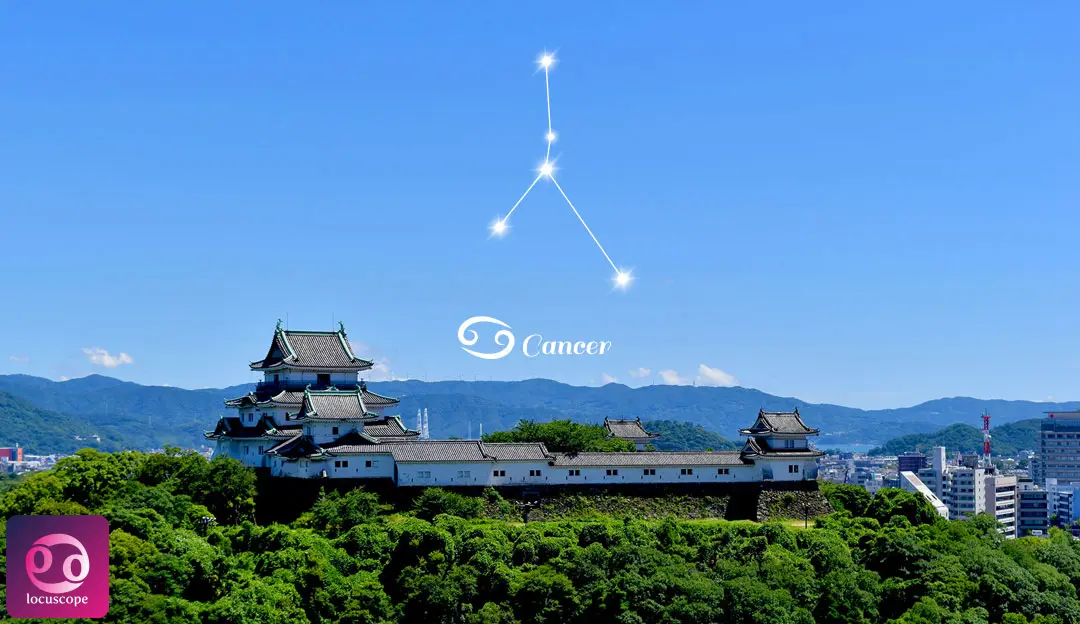
Cáncer
July 19, 0819
We've designated this date as the birthday because it's when the monk Kūkai held the first esoteric Buddhist service at Mount Kōya, establishing the sacred temple complex that would become the headquarters of Shingon Buddhism.
Ubicación
Wakayama Vibra de esta Semana
Descubre qué energías están influyendo en este lugar esta semana
Vibras Anteriores
Explora las energías semanales pasadas y las influencias cósmicas.
Perfil de Personalidad
The Kii Peninsula is a spiritual fortress, a landscape of dense, ancient cedar forests and fog-shrouded mountains that seem to guard the very heart of Japan. This is Wakayama. Its geography is not passive; it is an active participant in its story, a natural sanctuary that made it the only conceivable place for the monk Kūkai to establish a new center for Japanese spirituality.
This prefecture’s birth isn't marked by a battle or a treaty, but by a sound. On July 19, 0819, Kūkai, posthumously known as Kōbō Daishi, held the first esoteric Buddhist service at Mount Kōya (Kōya-san), and the chanting that echoed through the trees became the prefecture's first heartbeat. He didn't just build a temple; he founded a "spiritual home" for Shingon Buddhism, a place of intense discipline, learning, and mysticism deliberately removed from the political noise of the capital.
For over 1,200 years, Wakayama has served this single, profound purpose: it is the keeper of the path. Its identity is etched into the stone steps of the Kumano Kodō, the network of UNESCO World Heritage pilgrimage trails that wind through its mountains, connecting the three grand shrines of Kumano. This is not a place of sudden revolutions; it is a place of the steady, devotional footstep, of pilgrims walking the same paths their ancestors did a millennium ago.
While the mountains hold the spirit, the rugged Pacific coastline feeds the body. The prefecture is a quiet agricultural powerhouse, famous for its arida mikan (mandarin oranges) and the sharp, puckering saltiness of its umeboshi (pickled plums). Its most famous export, however, may be the rich, pork-bone-and-soy-broth of Wakayama ramen, a dish of such local pride it's simply called chūka soba ("Chinese noodles") here, as if it were the default. Wakayama is the nation's spiritual anchor, a place of deep memory and quiet nurture, smelling of sandalwood incense, damp earth, and the sharp tang of the sea.
Etiquetas
El Alma Mística
Archetype: The Ancient Heart. The Keeper of Secrets. The Pilgrim's Soul.
Born on July 19, Wakayama is a Cancer, the sign of home, heritage, and deep emotional roots. This is no accident. Its entire identity is based on the Cancerian act of creating a sanctuary. Kūkai didn't choose this land to conquer; he chose it to nurture a new school of thought. For 1,200 years, Wakayama’s primary role has been to protect this spiritual home, guarding the traditions of Shingon Buddhism and sheltering the 200,000 graves in Okunoin cemetery, where Kūkai himself is said to be in eternal meditation.
The Kumano Kodō pilgrimage trails function as the "veins" of this Cancerian body, carrying sincere seekers to its nurturing heart. This is the shadow side of Cancer, too: it is insular, hidden, and can feel impenetrable. Wakayama is geographically and culturally removed, shrouded in mist and mountain ranges, and it does not give up its secrets easily.
If Wakayama were a person, she is the old abbess at the end of a long mountain pass. She doesn't speak much, but her soup is perfect and she knows exactly why you’ve come, even before you do. She smells of 1,000-year-old cedar, damp moss, and the sharp salt of the coast. She runs the Okunoin cemetery, tending to the tombs of feudal lords and modern CEOs not as a place of death, but as a waiting room for the future Buddha. She finds modern noise distasteful but will patiently guide any sincere seeker, handing them a walking stick, a mikan, and a bowl of ramen. She is the nation's spiritual anchor, and she knows it.