Basingstoke est un Cancer
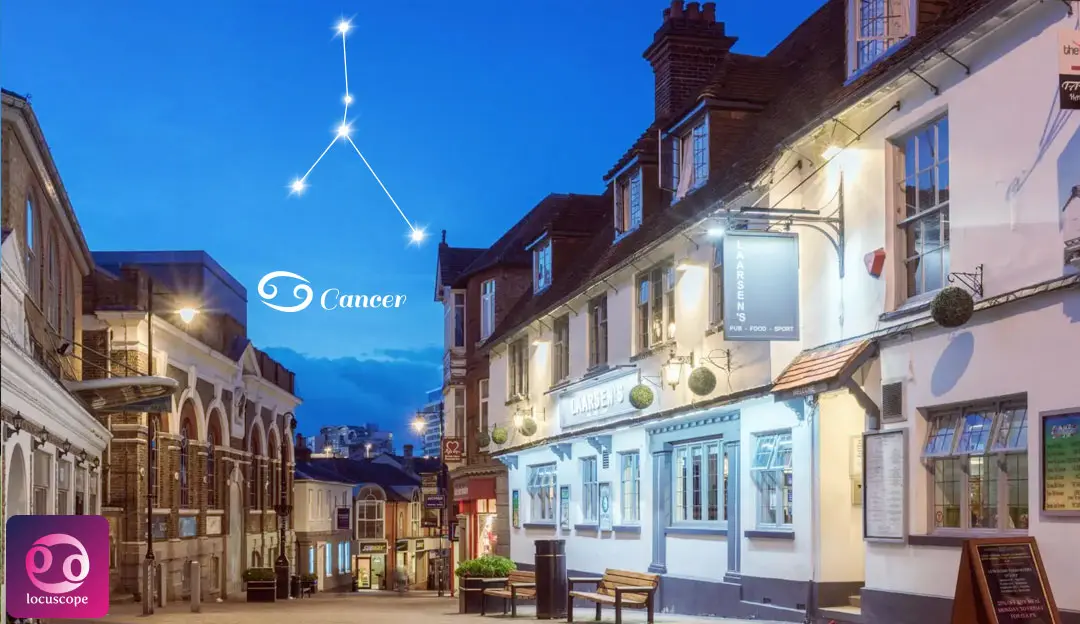
Cancer
June 26, 1227
We accept this date as the birthday because it marks the first Royal Charter granted to the town for a market and an annual fair, a key moment that established its status as a significant market town in the region.
Emplacement
Basingstoke Vibration de la Semaine
Découvrez quelles énergies influencent ce lieu cette semaine
Vibrations Précédentes
Explorez les énergies hebdomadaires passées et les influences cosmiques
Profil de Personnalité
When Henry III signed the royal charter on a midsummer day in 1227, granting permission for a weekly market, he inadvertently sowed the seeds for one of England's most misunderstood settlements. While outsiders often caricature Basingstoke as a mid-century concrete utopia of roundabouts and office blocks, its soul is decidedly older, rooted in the chalk downlands of Hampshire. The geography here is subtle but strategic; positioned at the source of the River Loddon, it has always been a place where paths converge.
The charter didn't just allow for trade; it codified a spirit of commerce that persisted through the centuries, long before the London Overspill plan of the 1960s radically reshaped the skyline. For seven hundred years, this was a sturdy agricultural hub, famous for malt and wool. The transition from medieval market town to the poster child of modern urban planning was not a replacement but an overlay. The ancient market square still beats beneath the brutalist architecture, a ghost of the 13th century haunting the shopping centers.
Culturally, Basingstoke is a study in pragmatic adaptation. It does not boast the dreaming spires of its neighbors, but it possesses a dogged resilience. This is the town that produced Thomas Burberry, the man who invented gabardine to keep the British dry, a perfect metaphor for the town's practical nature. Today, that practicality manifests in a distinct identity: a place that works. It is the engine room of the commuter belt, often derided but entirely essential. The modern character is defined by a strange blend of suburban peace and corporate ambition, where the ruins of the Holy Ghost Chapel sit quietly near the railway tracks, reminding residents that while the concrete is new, the ground is old.
Tags
L'Âme Mystique
Archetype: The Concrete Shell. The Provider. The Unexpected host.
Born under the sign of Cancer, Basingstoke is the protective mother of the commuter belt, though she expresses her care through logistics rather than hugs. Cancer is the sign of the home and the shell, and no town embodies the concept of the protective shell quite like this fortress of ring roads and shopping malls. The 1227 charter date suggests a deeply cardinal energy; this isn't a passive town, but one that actively initiates trade and security for its people.
Historically, the town's Cancerian nature is proven by its role as a sanctuary. In the 1960s, it opened its arms to thousands of London families leaving the bomb-scarred capital, providing them with homes and gardens. It nurtures. However, like the crab, it has a hard exterior that can seem impenetrable or unappealing to those who don't take the time to look inside.
If Basingstoke were a person: He would be a middle-aged logistics manager named Gary who drives a sensible Volvo. He wears a beige raincoat (Burberry, naturally) and is obsessed with the most efficient route to get anywhere. At parties, people assume he is boring because he talks about zoning laws and train timetables. But if you get stuck in a crisis, Gary is the first one there. He has a packed lunch ready for you, a first aid kit in the trunk, and he knows exactly how to fix your radiator. He is sentimental about the past, keeping a small, medieval locket hidden under his polyester tie, but he would never admit to crying during movies. He is reliable, unflashy, and quietly holds the entire regional economy together while everyone else makes fun of his haircut.