Tijuana est un Cancer
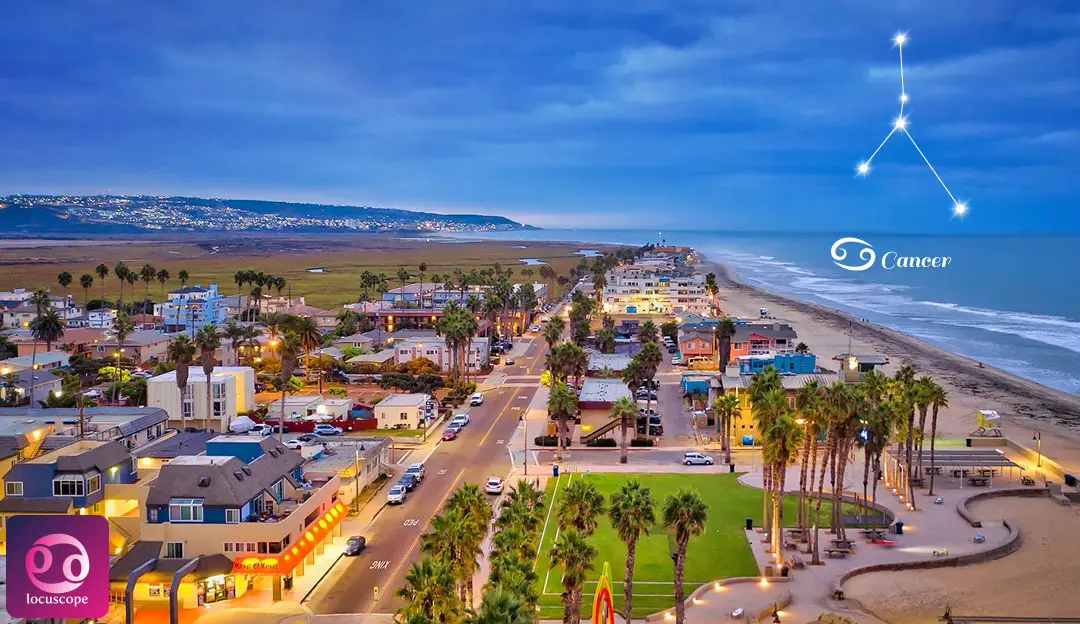
Cancer
July 11, 1889
We accept this date as the birthday because it marks the agreement that established the first official city street plan, an event celebrated today as the definitive founding of modern Tijuana.
Emplacement
Tijuana Vibration de la Semaine
Découvrez quelles énergies influencent ce lieu cette semaine
Profil de Personnalité
Tijuana was not grown from a seed; it was drawn on a map. On July 11, 1889, the heirs of Santiago Arguello and the creditor Agustin Flores signed the agreement that formalized the urban layout of the Zaragoza ranch, officially creating the street grid of modern Tijuana. This was a birth of geometry and law, imposed on a landscape of dust, chaparral, and rushing potential. Unlike the slow-burning colonial cities of the interior, Tijuana's history is a rapid-fire montage of the 20th century, largely defined by its relationship with the border line that slices across the continent just to its north.
For much of its existence, the city served as a playground for its northern neighbor, exploding into relevance during the Prohibition era when Americans flooded south for tequila and horse racing. But to define Tijuana merely by its vices is to ignore its incredible resilience. This is a city of migrants, a funnel where the hopes of Latin America congregate. The geography is chaotic-hills crowded with makeshift housing, canyons that flash-flood, and a coastline that crashes against the border wall.
In the modern era, Tijuana has shed its skin. It is no longer just a tourist trap but a powerhouse of medical technology, aerospace manufacturing, and arguably the most exciting culinary scene in Mexico (Baja Med). It is a hybrid city, neither fully Mexican nor American, speaking a 'Spanglish' dialect of culture that is entirely its own. It creates art from trash and high cuisine from street carts.
Tags
L'Âme Mystique
Archetype: The Neon Phoenix. The Mother of Exiles. The Border Alchemist.
A Cancer birth chart for a gritty border city seems wrong until you look closer. Cancer is the sign of the Crab-a creature with a rock-hard shell protecting a soft, vulnerable interior. Tijuana is exactly this. Its reputation is the hard shell: crime, chaos, and noise. But inside? It is the sign of Home and Motherhood. Tijuana is the mother to millions of displaced souls, offering shelter to those rejected by the north and those leaving the south. It is ruled by the Moon, governing the night, tides, and fluctuations-perfect for a city that comes alive after dark and changes its identity every decade.
Historical Proof: Cancer's protective instinct is written in the city's response to crises; when the Prohibition money dried up or when the cartels threatened its peace, Tijuana didn't break. It retreated into its shell, healed, and nurtured new industries like craft beer and art. The 'Caesar Salad,' invented here, is a classic Cancerian act: taking whatever leftovers are in the kitchen and creating something comforting to feed guests.
If Tijuana were a person: He is a heavily tattooed chef working in a kitchen that is on fire, yet he is calmly plating the most beautiful tostada you have ever seen. He wears a San Diego Padres baseball cap backward and speaks three languages in the span of one sentence. He is loud, prone to mood swings, and might try to sell you a fake watch, but if you told him you were hungry and broke, he would give you the shirt off his back and cook you a three-course meal. He has a scar over his eye that he lies about (the story changes every time), but he cries when he hears old ballads. He is the guy who knows everyone at the party-the bouncer, the bartender, and the owner-and can get you into the VIP section just by winking. He is rough, sentimental, and relentlessly alive.