Beja est un Sagittaire
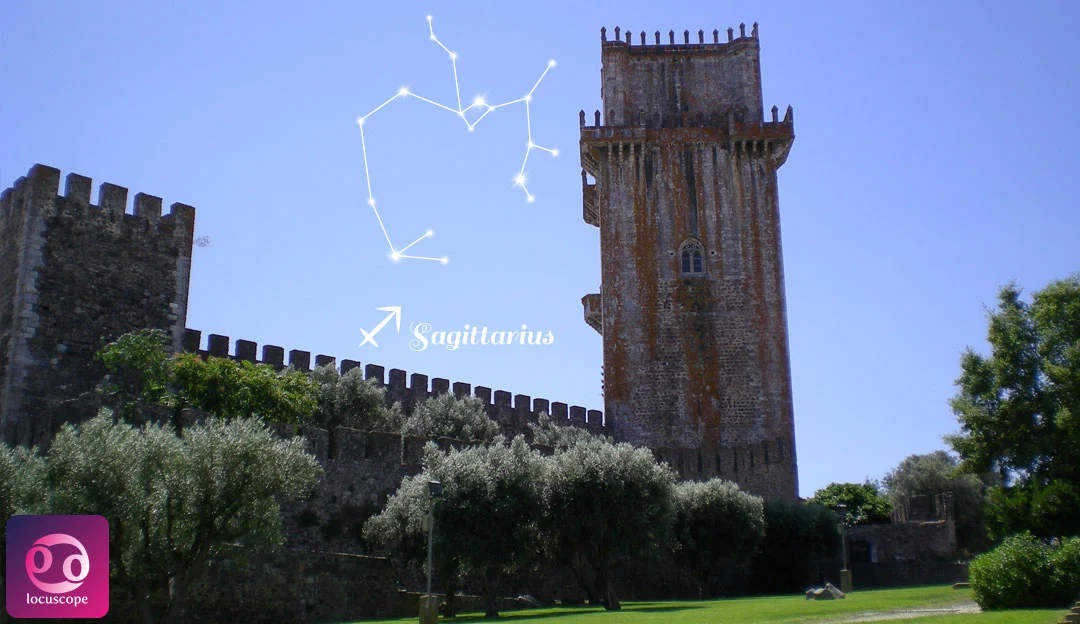
Sagittaire
December 20, 1521
We accept this date as the birthday because it's when King Manuel I granted a new, comprehensive charter (Foral) to the city of Beja, a key moment that modernized its governance and defined its Renaissance-era identity.
Emplacement
Beja Vibration de la Semaine
Découvrez quelles énergies influencent ce lieu cette semaine
Profil de Personnalité
The first thing you feel in Beja is the scale. It stands as a fortified crown atop a low hill, surveying the immense, rolling plains of the Alentejo. This is a landscape of profound horizons, of wheat fields scorched gold by a relentless sun. It’s a place that demands a wide, philosophical view and breeds a stoic character.
This is not a new city. Before Portugal, before the Moors, this was Pax Julia, a major Roman capital founded by Julius Caesar himself, a key administrative center for the entire region. Its history is a layered story of conquerors-Roman, Visigoth, Moorish-who all wanted this strategic, fertile prize, the "granary of Portugal."
The birth date of December 20, 1521, is not a founding; it's a codification. King Manuel I, at the very height of Portugal's global expansion and "Age of Discovery," granted this new Foral (charter). It was an act of Renaissance modernization, a legal and administrative "clean-up" that brought the ancient, multi-layered city into the new age of global empire. It was a philosophical restructuring of a place that had already seen it all.
This deep, fiery, and slightly tragic soul is captured in its most famous, if perhaps fictional, cultural export: the Letters of a Portuguese Nun, a 17th-century story of passionate, forbidden love and philosophical lament. Today, Beja remains the proud, unbothered heart of the "deep" Alentejo. It moves at the pace of the agricultural season: slow, deliberate, and tied to the vast, open earth.
Tags
L'Âme Mystique
Archetype: The Ancient Philosopher. The Sun-Scorched Ruler. The Resilient Granary.
A Renaissance charter on December 20th, right on the cusp, gives Beja the boundless, fiery spirit of Sagittarius. This is the sign of expansion, higher knowledge, philosophy, and untamable freedom, and it is Beja. The city is defined by the vast, open plains (Sagittarian freedom). Its very Roman name, Pax Julia, reflects a philosophical (Sag) ideal imposed through expansion (also Sag).
The historical proof is perfect. The 1521 charter itself was granted by Manuel I during Portugal's "Age of Discovery"-the most Sagittarian project in history. They were literally expanding the known world. This charter was the "higher learning" of law and governance being applied to an ancient city. And let's talk about the Letters of a Portuguese Nun-a story of fiery, rule-breaking (Sag) passion and deep philosophical lament, broadcast to the world.
If Beja were a person: She's a history professor who also runs a massive farm. She has a Roman coin in her pocket and dirt under her fingernails. She’ll talk to you for hours about philosophy and law, but she's most comfortable staring at an open horizon, saying nothing at all. She’s fiercely independent and can't stand being rushed. She’s incredibly proud of her ancient lineage (don’t you dare call her "provincial") but has a fiery, dramatic streak. She's honest to a fault and her generosity is as wide as the plains she calls home.