Victoria de Durango 게자리
게자리
July 8, 1563
We've designated this date as the birthday because it's when the Spanish explorer Francisco de Ibarra officially founded the city of 'Villa de Durango,' naming it after his native town and establishing the future state capital.
위치
Victoria de Durango 이번 주 바이브
이번 주에 이 장소에 어떤 에너지가 영향을 미치는지 알아보세요
이전 바이브
지난 주간 에너지와 우주적 영향력 탐구하기
성격 프로필
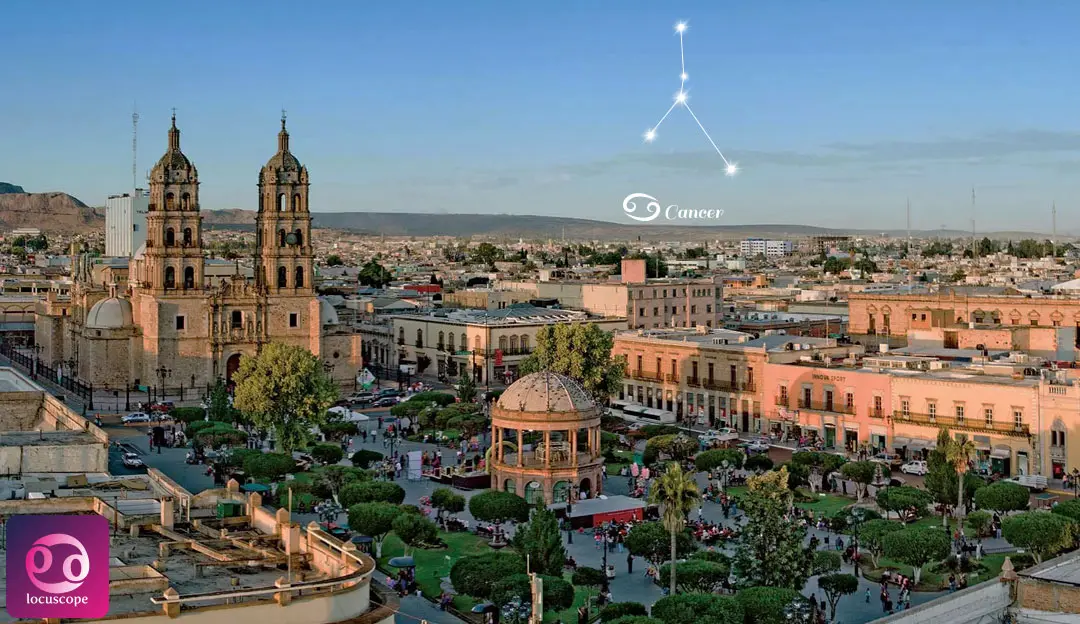
To understand Victoria de Durango is to understand the silence of the high desert broken by the strike of a pickaxe. Founded on July 8, 1563, by the Basque explorer Francisco de Ibarra, this city was never meant to be a soft place. Ibarra chose this valley not for its comfort, but for its strategic dominance, naming it after his hometown in Biscay, Spain. For over four and a half centuries, it has served as the sentinel of the north, a rugged capital where the Sierra Madre Occidental crashes into the semi-arid plains.
The geography here dictates the temperament. It is a land of extremes-scorching days and freezing nights-that has bred a population known for a specific kind of stoic resilience. This is the "Land of the Scorpions" (Tierra de los Alacranes), a nickname that locals wear with a mixture of irony and pride. The arachnid is so ubiquitous it has become the city's unofficial mascot, encased in clocks, keychains, and lollipop sugar sold in the Mercado Gomez Palacio. But beyond the kitsch lies a serious history of extraction. The Cerro de Mercado, a mountain of iron ore discovered shortly after Ibarra arrived, turned Durango into a mining powerhouse that fueled the Spanish Crown.
Yet, there is a dramatic flair to this hardness. The sunlight here hits the colonial baroque buildings of the Historic Centre with such distinct clarity that Hollywood came calling in the 20th century. For decades, Durango was the "Movieland of Mexico," serving as the backdrop for over a hundred Westerns. John Wayne bought a ranch here; the dusty streets stood in for the Wild West in films like The Sons of Katie Elder. This duality defines the modern character: it is a place of deep, pious tradition-evident in the majestic Cathedral Basilica Menor-layered with the swagger of a cowboy movie star. It is an old soul in a leather jacket, looking north.
태그
신비로운 영혼
Archetype: The Iron Sentinel. The Desert Cinema. The Scorpion Heart.
Born under the sign of Cancer on July 8, Durango presents a fascinating astrological contradiction. Cancer is the sign of the crab-a creature with a hard shell protecting a soft interior. Here, the crab is swapped for the scorpion. The city is fiercely protective of its history and its people (a classic Cancerian trait), but it guards this vulnerability with a formidable, defensive exterior. The founding in 1563 established a "home base" for northern exploration, fitting for a sign that rules the concept of home and roots.
The cinematic history is pure Cancerian sentimentality manifested through visual storytelling. Cancer is ruled by the Moon, which governs memory and the past; Durango literally reenacts the past for a living on its movie sets. The element of Water (Cancer) in a desert landscape suggests a hidden emotional depth-the subterranean aquifers of feeling beneath the dry earth.
If Victoria de Durango were a person: He is a retired stuntman with leather-tanned skin and hands that feel like sandpaper. He wears a vintage cowboy hat, not as a costume, but because he has worn it every day since 1970. He drinks mezcal straight, no chaser, sitting on a porch chair he carved himself. He does not speak much, preferring to stare at the horizon, but if you insult his family or his hometown, the aggression comes out sudden and sharp-like a scorpion strike. He has a box of old love letters hidden under his bed that he reads when the moon is full, weeping silently before locking his heart back up in iron. He is the toughest guy you know, but he is the one who remembers every single birthday.