Egypt 물고기자리
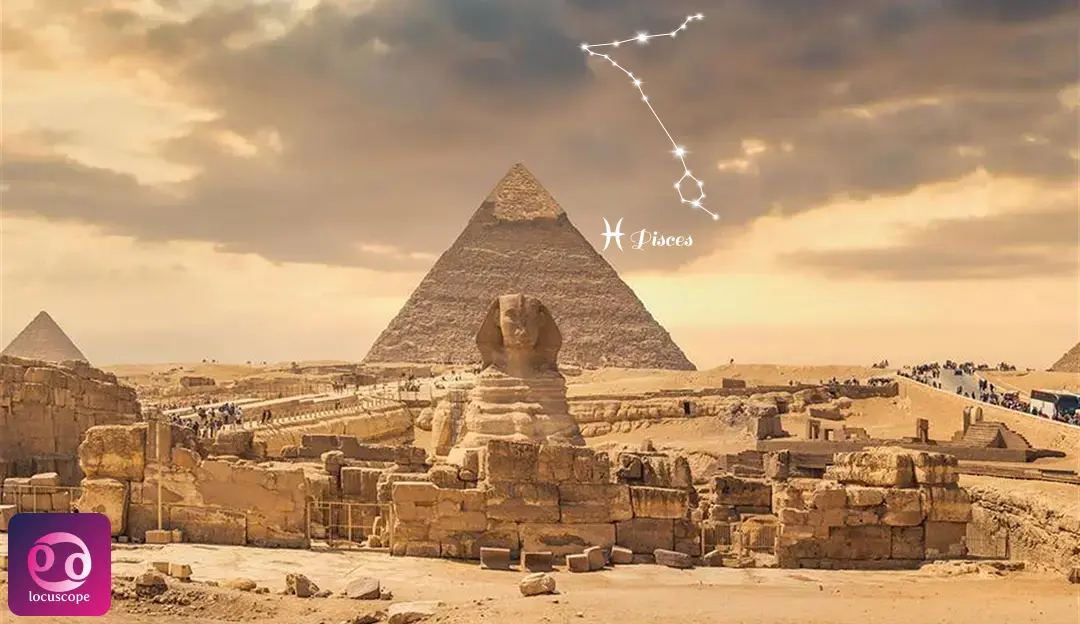
물고기자리
February 28, 1922
This date marks a pivotal moment in modern Egyptian history. On this day in 1922, the United Kingdom formally ended its protectorate over Egypt through a unilateral declaration of independence, leading to the establishment of the sovereign Kingdom of Egypt.
위치
Egypt 이번 주 바이브
이번 주에 이 장소에 어떤 에너지가 영향을 미치는지 알아보세요
성격 프로필
Though we mark its modern sovereignty from February 28, 1922, this land carries more than five millennia of contiguous civilization. Egypt is not a country; it is a monument to human existence, a place where time itself is measured differently. Its entire character was and is dictated by a single, divine force: the Nile River.
This river is the ultimate creator. It is the geographic artery that flows south to north (Upper to Lower Egypt), creating a long, impossibly lush ribbon of fertile black land (Kemet) flanked by an ocean of uninhabitable red desert (Deshret). This stark duality-life and death, order and chaos-is the central theme of the Egyptian soul. It was here, around 3100 BCE, that the first pharaoh, Narmer, unified these two lands and created the world’s first recognizable nation-state.
For 3,000 years, this civilization was a study in profound stability. Its power was not just in armies but in ideas: in Ma'at (the concept of cosmic order, truth, and justice), in pioneering mathematics to build the Giza pyramids, in a complex pantheon of gods, and in an abiding obsession with the afterlife. This stability was so profound that it made Egypt the most coveted prize in the ancient world.
It absorbed its conquerors, one by one. The Persians, Alexander theGet (who founded Alexandria), and his Ptolemaic successors-most famously Cleopatra-all came and were, in turn, seduced and changed by the land. The Romans turned it into a breadbasket, and later, the Arab conquest in the 7th century CE fundamentally reshaped its identity, language, and religion, establishing Cairo (Al-Qahira) as the intellectual beacon of the Islamic world, home to the thousand-year-old Al-Azhar University. The Ottomans and Mamluks followed, each adding another layer of complexity.
By the 19th century, leaders like Muhammad Ali tried to forge a modern state, but this ambition led to British occupation and the construction of the Suez Canal, a geopolitical artery that made Egypt critical to a global empire.
The 1922 "birth" was not a fiery revolution. It was a unilateral declaration, a political maneuver that ended the formal British Protectorate and created the Kingdom of Egypt. It was a return to self-rule, but a complicated one, riddled with lingering foreign influence. This date is a single, modern inscription on an ancient obelisk, a story of a profoundly old soul navigating the complex, often messy, world of modern nationhood. Today, its character is a living paradox: the chaotic, vibrant, 20-million-person hustle of modern Cairo set against the eternal, silent gaze of the Sphinx.
태그
Egypt 내에서 탐험하기
Egypt 내의 장소들과 그들의 점성술 프로필을 발견하세요
신비로운 영혼
Archetype: The River of Time. The Keeper of Secrets. The Eternal Monument.
Born on February 28th, modern Egypt is a Pisces, and it could be no other sign. Pisces is the final sign of the zodiac, the old soul that has seen everything and absorbed the lessons of all who came before. This is Egypt. Ruled by Neptune (the planet of mysticism, dreams, and the collective unconscious) and Jupiter (wisdom and expansion), Egypt’s entire identity is Piscean.
It is a water sign, and Egypt is the gift of the Nile. The river is its lifeblood, its spirit, its connection to the divine. But more profoundly, the ancient Egyptian civilization was the most Piscean in history-an entire culture fixated on the unseen world, the afterlife, and the mystical. The pyramids are not just tombs; they are Neptune’s fantasy, massive, transcendent structures built to bridge this reality with the next.
Its history proves the zodiacal fit. Pisces has a famous "boundary-less" quality; it merges and absorbs. Egypt has been "conquered" by Greeks, Romans, Arabs, and Ottomans, yet it never truly lost itself. It absorbed them. The Greek Ptolemies became Egyptian pharaohs. Cairo became the capital of the Arab world. This absorbent, resilient, "go-with-the-flow" nature is the deepest Piscean survival tactic.
Even its 1922 independence was Piscean. It wasn't a violent, Arian separation; it was a "declaration," a dissolving of a protectorate, an ambiguous birth that left the nation in an in-between state, which Pisces famously rules.
If Egypt were a person, she is "Umm al-Dunya" (Mother of the World). She sits in a crowded Cairo café, her eyes holding the wisdom and melancholy of 5,000 years. She wears an ancient cartouche for protection under her clothes, knows the exact price of cotton, and can recite 10th-century poetry and the lyrics to every song by Umm Kulthum-the "Star of the East" whose transcendent Piscean voice dissolved borders across the Arab world. She is warm, feeds you molokhia with insistent hospitality, and has a laugh that echoes with history. But she is also a pragmatist, hardened by time. She is deeply proud, slightly weary, and profoundly spiritual, carrying the bureaucratic legacy of the pharaohs (a shadow side of Ma'at) in her struggle with modern paperwork. She has seen it all, and she knows, with the certainty of the Nile's flood, that this too shall pass.