Iran 양자리
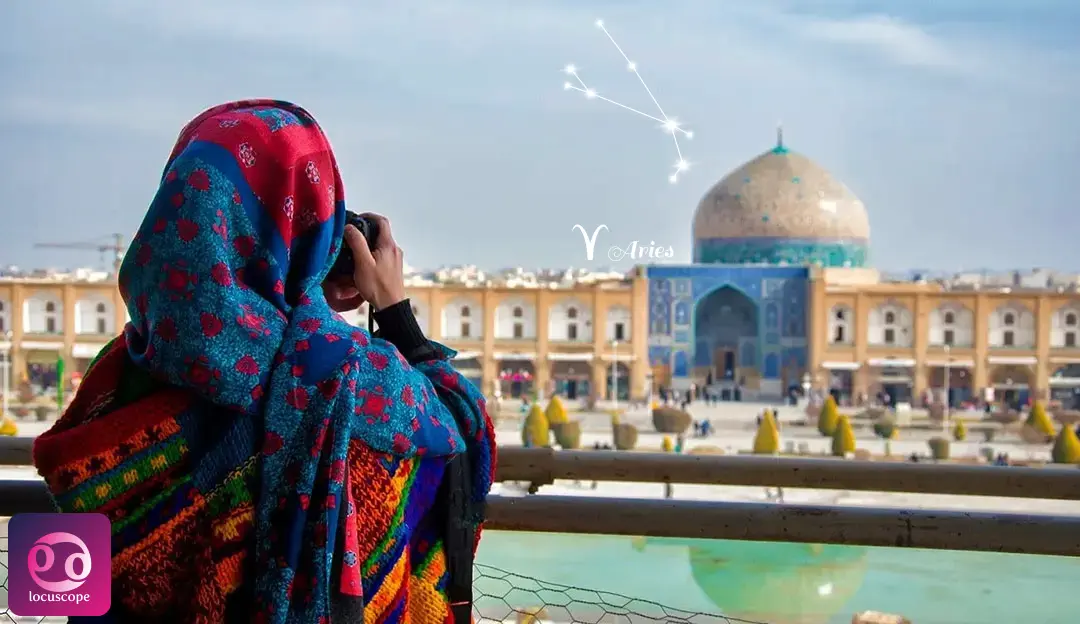
양자리
April 1, 1979
This date is celebrated as Islamic Republic Day in Iran. It marks the moment in 1979 when, following a decisive national referendum, the establishment of the Islamic Republic of Iran was formally proclaimed, officially abolishing the 2,500-year-old monarchy.
위치
Iran 이번 주 바이브
이번 주에 이 장소에 어떤 에너지가 영향을 미치는지 알아보세요
이전 바이브
지난 주간 에너지와 우주적 영향력 탐구하기
성격 프로필
Though we mark April 1, 1979, as its modern birthday, this date is not a birth but a metamorphosis-a violent, ideological remaking of a land that carries more than three millennia of continuous civilization. This is Persia, a name that echoes with the weight of empire, poetry, and faith. To understand Iran, one must look beyond the 1979 revolution and into the deep, resilient soul it sought to both claim and redefine.
This land's personality was forged on the high, arid Iranian plateau. Walled off by the Zagros and Elburz mountains, this geography created a natural fortress, a self-contained world that bred a fierce, stubborn independence and a profound sense of cultural exceptionalism. This is the heartland of the Achaemenid Empire, the world's first superpower. Under Cyrus the Great, it was not just a military power but an idea-a revolutionary concept of a multi-ethnic, multi-lingual empire built on tolerance, as enshrined in the Cyrus Cylinder. This was the home of Zoroastrianism, one of humanity’s first monotheistic faiths, which structured the world into a cosmic battle between good and evil-a dualism that still runs deep in the nation's psyche.
When the Arab conquests brought Islam, Persia did not vanish. It absorbed. It performed the most sophisticated cultural alchemy in history, taking the Arabic script and the new faith and making them uniquely its own. It became the intellectual engine of the Islamic Golden Age. This is the land of Ferdowsi, who preserved the Persian language in the epic Shahnameh; of Rumi and Hafez, whose mystical poetry explored the divine; and of Avicenna, whose medical texts were used in Europe for centuries.
A second critical pivot came with the Safavid dynasty, which forcefully converted the nation to Shia Islam. This act was a profound, defiant declaration of "otherness," politically and theologically severing Iran from the surrounding Sunni world and creating the unique identity of martyrdom and righteous dissent that defines it today.
This deep, complex history is what makes the 20th century so combustible. The Pahlavi Shahs tried to build a new identity by force, a rapid, secular, Western-facing modernization that celebrated Iran's pre-Islamic (Persian) past while alienating its deep-rooted Islamic (Shia) present. The 1979 date is the volcanic result of that friction. The referendum on April 1st was the moment the ancient, clerical, and revolutionary strains of the personality joined forces to abolish 2,500 years of monarchy. It was a total rejection of the outside world's influence and an attempt to build a future on its own austere, theological terms.
Today, Iran is a land of profound, jarring duality. It is the formal, stark, ideological face of the Republic, and it is the private, warm, chaotic world of its people-a young, educated, and deeply romantic populace who live their lives in the gap between zaher (the public exterior) and baten (the private interior). It is a nation of ancient gardens hidden behind high walls.
태그
신비로운 영혼
Archetype: The Walled Garden. The Poetic Revolutionary. The Ancient Martyr.
To be born on April 1st is to be an Aries. This is not the gentle, diplomatic birth of a Libra. This is the fiery, head-first, "I am" declaration of the Ram, the god of war. The 1979 proclamation was the most Aries act imaginable: a revolutionary, uncompromising new beginning. It was a match thrown on 2,500 years of history, a complete burning of the old order to start something pure, primal, and defiant. This is a fire sign, and this revolution was a fire.
This Aries energy is not new. It is the primal, pioneering charge of Cyrus the Great bursting out of the plateau to build the world's first empire. It is the aggressive, identity-forging decision of the Safavids to declare Shi'ism, effectively picking a fight with the entire region to establish its own unique path. Aries must be itself, at any cost.
But this is an Aries with the watery, ancient depth of Pisces (its preceding sign). Its revolutionary fire is filtered through a Shia lens of martyrdom, poetry, and a deep, almost mystical sadness. Its shadow side is that Arian fire turned inward: the stubborn pride, the isolation, the inability to compromise, and the deep suspicion of anyone telling it what to do.
If Iran were a person, she’d be a woman with the oldest, proudest, and most sorrowful eyes you have ever seen. She's a professor of ancient poetry who is also, somehow, a revolutionary street fighter. She’ll invite you into her exquisite walled garden, serve you tea flavored with saffron and rose water, and recite 14th-century poetry from memory. Then she'll get into a blistering argument with you about philosophy and politics. She is defined by taarof-a complex, frustrating dance of politeness where 'no' means 'maybe' and 'please, I insist' is a social command. In public, she is formal, reserved, and almost stern, her abundant charisma veiled by duty. But in private, behind closed doors, she’s a different person: loud, passionate, cynical, and deeply romantic, blasting forbidden music and laughing with defiant joy. She is intensely suspicious of newcomers-her trust has been broken for centuries-and she never forgets a grievance. She is a fortress and a garden, all at once.