Vitoria-Gasteiz é um Gêmeos
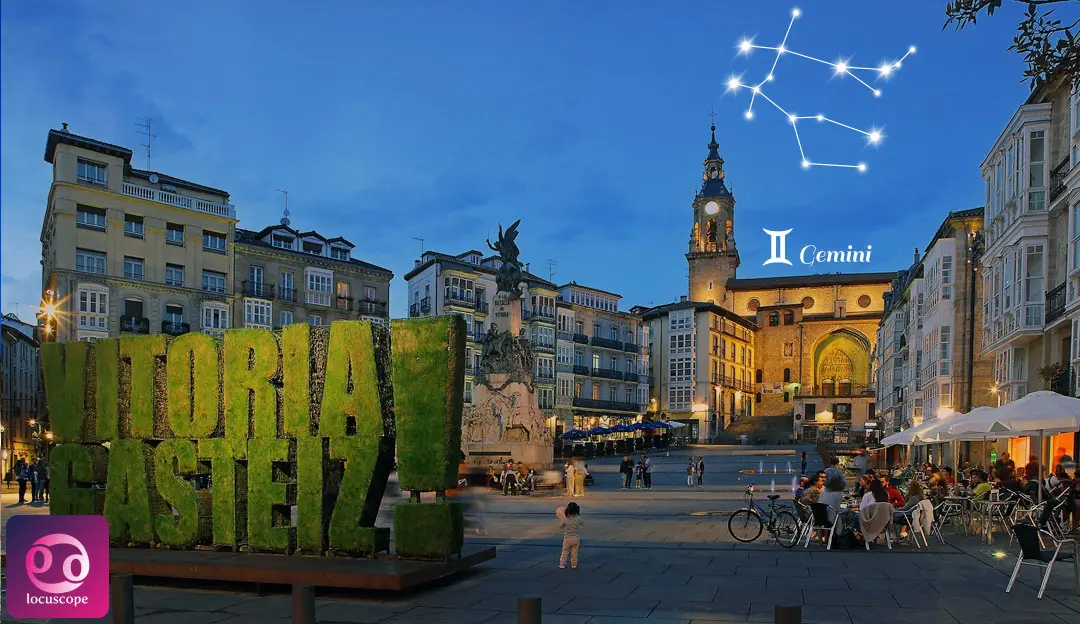
Gêmeos
June 15, 1181
This date marks the birthday because it's when King Sancho VI of Navarre officially founded the city of 'Nova Victoria' on the site of the old village of Gasteiz, establishing the modern Basque capital.
Localização
Vitoria-Gasteiz Vibração desta Semana
Descubra quais energias estão influenciando este lugar esta semana
Vibrações Anteriores
Explore as energias semanais passadas e as influências cósmicas
Perfil de Personalidade
Vitoria-Gasteiz is a tale of two cities fused into one strategic mastermind. Geographically, it sits not on the rugged coast like its Basque sisters, but on the high central plateau, the Llanada Alavesa. This location shaped its destiny as a logistical crossroads between the kingdom of Castile and Europe. The birthday of June 15, 1181, marks the moment King Sancho VI of Navarre looked at the ancient hamlet of Gasteiz, perched on a defensible hill, and granted it the name 'Nova Victoria'-New Victory. It was a branding exercise in power, asserting Navarrese dominance in a contested land.
The city's urban DNA is unique. The medieval center, known as the 'Almendra' (Almond) due to its oval shape, is a tight weave of guilds and history. Yet, Vitoria expands outward into a model of modern European urbanism. It was named the European Green Capital in 2012, boasting a Green Belt that encircles the city, allowing nature to infiltrate the concrete.
Culturally, Vitoria is the administrative brain of the Basque Country. It lacks the industrial grit of Bilbao or the aristocratic vanity of San Sebastian. Instead, it offers a pragmatic, high quality of life. Locals, known as Babazorros (originally meaning bean eaters), take pride in their down-to-earth reputation. They celebrate the festival of La Blanca, where the descent of Celedon-an umbrella-toting villager-marks days of revelry. It is a city that values planning, consensus, and steady growth over flashy displays.
Tags
A Alma Mística
Archetype: The Green Strategist. The Double Agent. The Quiet Sovereign.
Born under the sign of Gemini, Vitoria-Gasteiz is literally a twin: Vitoria and Gasteiz. The duality of the sign defines every cobblestone. It is at once an ancient medieval defensive point and a hyper-modern green utopia. Geminis are the communicators of the zodiac, ruled by Mercury. It makes perfect astrological sense that this city became the seat of the Basque Parliament and the government headquarters-it is the place where the region goes to talk, debate, and legislate.
The history of 1181 is pure Gemini adaptability. King Sancho took an existing village and rebranded it to suit a political narrative. Throughout the centuries, Vitoria has switched allegiances and played both sides to survive, thriving as a trade hub where merchants swapped languages as easily as currency.
If Vitoria-Gasteiz were a person: He would be a high-ranking diplomat who bikes to work in a tailored suit. He carries two phones and speaks four languages fluently. He is the guy at the party who doesn't need to be the center of attention because he is the one actually organizing the event. He is obsessed with sustainability and judges you silently for not recycling, but he is also a foodie who will keep you out until 4 AM eating pintxos and debating political philosophy. He seems harmless and friendly, like a neighbor who loans you tools, but you suspect he has a safe full of state secrets in his basement.