Portugal é um Sagitário
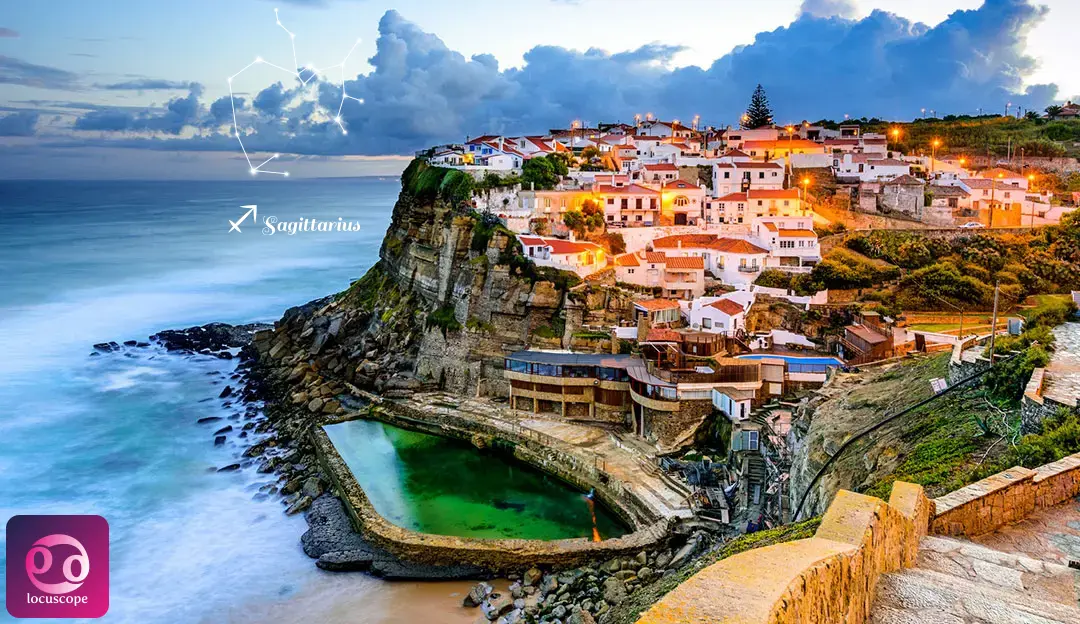
Sagitário
December 1, 1640
This date is celebrated as the Restoration of Independence Day in Portugal. It marks the day in 1640 when a successful revolution in Lisbon ended the 60-year Iberian Union, restoring Portugal's full sovereignty from Spanish rule.
Localização
Portugal Vibração desta Semana
Descubra quais energias estão influenciando este lugar esta semana
Vibrações Anteriores
Explore as energias semanais passadas e as influências cósmicas
Perfil de Personalidade
Portugal is a paradox: a small European nation with a soul as vast and deep as the Atlantic Ocean it faces. Its entire identity is written on this coastline. While the rest of Iberia looks inward, fortified by mountains and high plateaus, Portugal has always turned its back to the continent, staring restlessly at the horizon. This geography forged a nation not of land-based aristocrats, but of navigators, merchants, and philosophers, a people who understood that their destiny lay not in Europe, but in the unknown.
This maritime destiny exploded in the 15th and 16th centuries. This wasn't just exploration; it was the creation of the modern, globalized world. Driven by the obsessive vision of Prince Henry the Navigator, Portuguese caravels-small, fast ships built for the open ocean-charted the unknown. They were the first. Vasco da Gama found the sea route to India. This tiny strip of land, with a population of perhaps a million, built a colossal, ocean-spanning empire that stretched from Brazil to Goa, from Angola to Macau.
But this golden age bled out. A disastrous crusade in Morocco and a subsequent succession crisis led to the Iberian Union in 1580. For 60 years, Portugal was absorbed by its larger neighbor, Spain. This was a national humiliation, a suffocating loss of self, a winter of the soul.
The date of December 1, 1640, is therefore not a birth, but a resurrection. It was a swift, decisive, and successful noble-led coup in Lisbon that stormed the palace, deposed the Spanish viceroy, and restored the Portuguese crown. It was a violent, desperate declaration: "We are not Spanish. We are, and will always be, ourselves."
This entire history-the glorious rise, the suffocating fall, the defiant restoration-is captured in a single, untranslatable word: saudade. It is a profound, melancholic longing for this lost, glorious past, a feeling that echoes in the mournful guitars of Fado. Today, Portugal is an old soul. It is the quiet keeper of Europe's oldest borders, a place of sun-baked azulejo tiles, a thousand recipes for bacalhau (salt cod), and a dignity as deep and enduring as the ocean it still claims as its own.
Tags
Explorar em Portugal
Descubra lugares dentro de Portugal e seus perfis astrológicos
A Alma Mística
Archetype: The Great Navigator. The Mournful Poet. The Atlantic Soul.
Born on December 1, Portugal’s restored soul is a Sagittarius. Of course it is.
This is the most cosmically destined zodiac sign of all. Sagittarius is the Archer, the restless global traveler, the philosopher, and the explorer who must know what is over the horizon. What other sign could possibly represent the nation that launched the Age of Discovery? This wasn't a quest for land (like a Taurus) or for power (like a Scorpio); it was a Sagittarian quest for knowledge, for adventure, for the sheer freedom of the open, unknown sea.
But the 1640 date shows the other side of the Archer. Sagittarius is the sign that values freedom above all else. It cannot be contained, ruled, or fenced in. The 60-year Iberian Union, being controlled by its neighbor, was a spiritual prison. The December 1 revolution was a classic Sagittarian freedom-fight, a desperate "get off me" explosion to restore its independence and aim its bow back at the world.
This sign is ruled by Jupiter, the planet of expansion and optimism, which explains the impossible, blind faith it took for such a small country to believe it could claim the entire ocean.
If Portugal were a person... He’d be an old sea captain, skin like leather from a thousand voyages, sitting at a cafe by the Lisbon docks. He has a tattoo from Macau and another from Angola. He’s telling you, over a tiny, powerful coffee, about the one time he was truly rich, the ruler of the world. He’s not bitter, but he is melancholic-it’s called saudade, and he explains it with a poetic shrug. He’s a romantic who has seen everything. He knows he's not the man he was in 1520, but he doesn't care. He still owns the ocean, and he still believes, with a philosopher's unshakeable optimism, that the next ship coming in might be a good one.