Trentino-South Tyrol é um Gêmeos
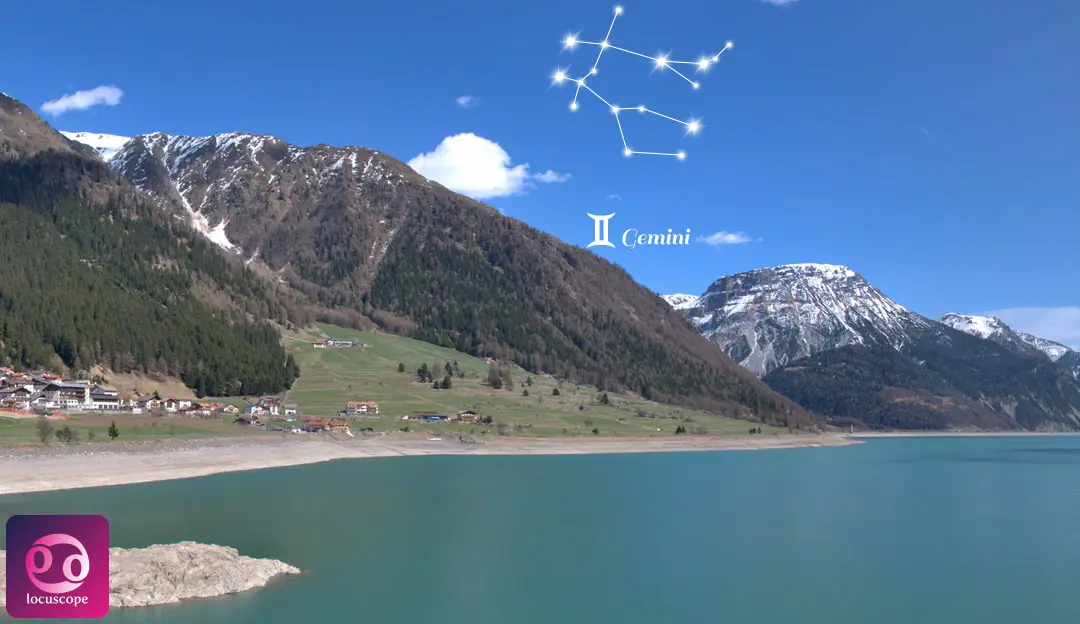
Gêmeos
June 9, 1027
This date is recognized as the birthday because it's when the Holy Roman Emperor Conrad II officially created the Prince-Bishopric of Trent, the ecclesiastical state that would govern the region for nearly 800 years and define its unique history.
Localização
Trentino-South Tyrol Vibração desta Semana
Descubra quais energias estão influenciando este lugar esta semana
Vibrações Anteriores
Explore as energias semanais passadas e as influências cósmicas
Perfil de Personalidade
To understand Trentino-South Tyrol, one must first understand the mountains. The Dolomites are not a gentle backdrop; they are the actors, the walls, and the very bones of this land. These jagged limestone peaks have spent millennia acting as a fortress and a filter, separating the Latin world from the Germanic one. This is a land of sheer verticality, of deep valleys and strategic passes-chief among them the Brenner-that funnel commerce, armies, and ideas between North and South.
This region was never destined to be simple. Its very geography demanded a hybrid identity. This destiny was formalized on June 9, 1027, when Emperor Conrad II, needing to secure that vital Alpine pass for his Holy Roman Empire, didn't create a duchy or a county. He created a Prince-Bishopric. This was a medieval masterstroke: power was vested in the Bishop of Trent, a figure who was simultaneously a servant of God in Rome and a vassal of the Emperor in Germany.
For nearly eight centuries, this fusion of temporal and spiritual authority defined the region. It became a land of negotiation. It was no accident that the pivotal Council of Trent (1545-1563), the Catholic Church's muscular response to the Protestant Reformation, was held here. Where else could the delegates from Rome and the ambassadors from the German principalities meet, argue, and redefine faith, but in this territory that understood both?
After the Prince-Bishopric dissolved, the land was absorbed by the Habsburgs, becoming a cherished part of the Austro-Hungarian Empire. The 20th century brought trauma: annexed by Italy after World War I, the German-speaking South Tyrol (Alto Adige) endured decades of forced Italianization. But the old spirit of negotiated compromise eventually won. Today, this autonomous region is one of Europe's most unique and affluent, a place where German efficiency and Italian dolce vita are not a paradox but a daily reality. It's a land where you can hear Schützen bands one valley over from a piazza full of friends enjoying an aperitivo; where knödel (dumplings) and speck are served alongside tagliatelle. It is, as it has been for a thousand years, a bridge built on a fortress.
Tags
A Alma Mística
Archetype: The Dual Throne. The Gilded Bridge. The Stone-Faced Diplomat.
This place had to be a Gemini. Born on June 9th, Trentino-South Tyrol is the textbook definition of the Twins, the most famously dualistic sign in the zodiac. This isn't just a metaphor; it is a literal, political, and cultural reality. The soul of this region is split between its two "twins": the Italian-speaking Trentino and the German-speaking South Tyrol. Like any Gemini, its primary function is communication, translation, and existing in two worlds at once.
This is the sign of Mercury, the messenger, and this region is the message, sitting astride the Brenner Pass, the primary information highway between the Mediterranean and Central Europe for two millennia. A Gemini is a master of adaptation and negotiation. How else could it host the Council of Trent, the most high-stakes theological negotiation of the early modern world? A Gemini thrives on this intellectual back-and-forth.
But this sign also has a shadow. When the twins aren't talking, the tension is unbearable. The 20th-century conflict between the German and Italian-speaking populations-the suppression, the resentment, the "Years of Lead" bombings-is the dark side of a Gemini at war with itself.
If Trentino-South Tyrol were a person: He's the hyper-efficient CEO who negotiates a billion-euro deal in German, then vanishes for a three-hour lunch because, certo, it's still Italy. He wears bespoke Loro Piana hiking boots to the office. He'll correct your grammar in one language and pour you a glass of gewürztraminer with the other. He remembers every empire that tried to rule him, from the Romans to the Habsburgs, and has quietly outlived them all, making a tidy profit in the process. He’s rich, a little cold, and breathtakingly beautiful-and he knows you'll pay a premium just to be near him.