Omsk это Лев
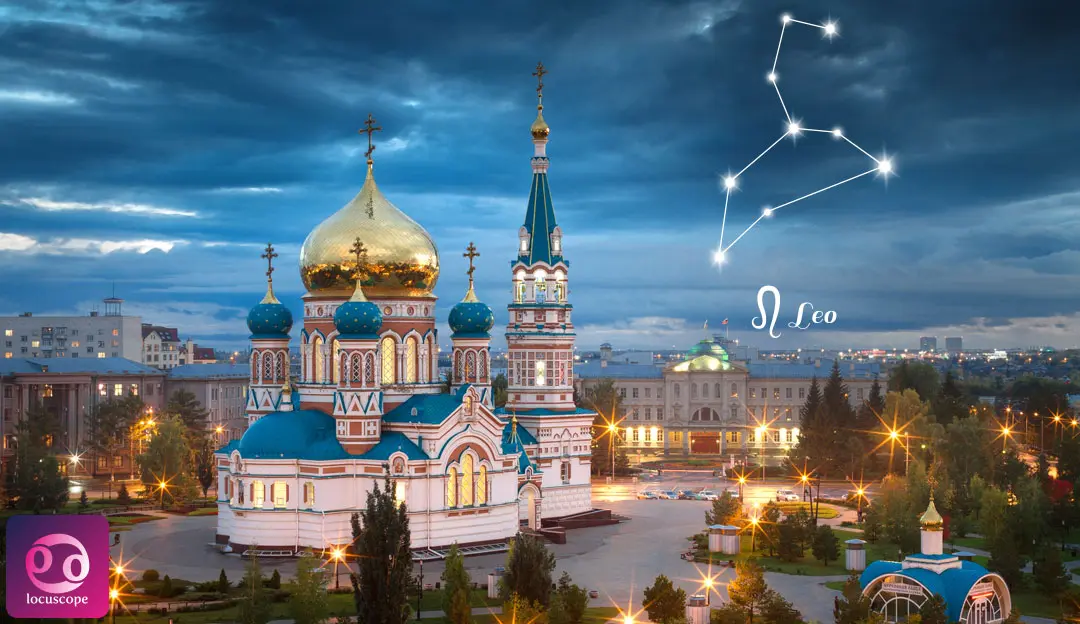
Лев
August 2, 1716
This date marks the birthday because it's the traditional date for the founding of the second Omsk fortress, the event that established the permanent settlement which grew into the great Siberian city of Omsk.
Местоположение
Omsk Вибрация Этой Недели
Узнайте, какие энергии влияют на это место на этой неделе
Предыдущие Вибрации
Изучите энергии и космические влияния прошлых недель
Профиль Личности
Omsk was born from a display of power. It wasn't a humble settlement that grew over time; it was a declaration. Founded on August 2, 1716, as a fortress at the strategic confluence of the Irtysh and Om rivers, its purpose was to project Russian imperial might deep into the wild Siberian steppe.
It quickly became a capital-first of the Siberian Cossacks, then of the Steppe region, and later of all Western Siberia. This city has a taste for drama and a proud, unyielding heart. Its history is not one of slow growth, but of grand, theatrical gestures. For one brief, glittering, and doomed year (1918-1919), Omsk declared itself the capital of all Russia. It was the seat of the anti-Bolshevik "White" government led by Admiral Kolchak, and it held the entire gold reserve of the former empire. It was a performance of sovereignty against the tide of history.
But this pride has a dark twin: exile. This is the city of Dostoevsky's "House of the Dead." The great writer was imprisoned here, and the brutal experience in the Omsk katorga (hard labor prison) forged his most profound work. Today, Omsk is a city of this duality: grand 19th-century theaters and avenues juxtaposed with the harsh reality of a frontier industrial center, forever proud of its dramatic past.
Теги
Мистическая Душа
Archetype: The Exiled King. The Dramatic Frontier. The Golden Prison.
To be founded on August 2nd is to be born a Leo, the sign of royalty, performance, pride, and the dramatic heart. Omsk is a Leo. It doesn't know how to be a supporting character. Its history is a highlight reel of Leoline grabs for the spotlight.
Its ultimate proof? Declaring itself the capital of Russia in 1918. This wasn't a practical move; it was a theatrical one. It was Admiral Kolchak, the "Supreme Ruler," holding court, protecting the gold (Leo's metal) in a dramatic, tragic play. It was Omsk demanding to be the center of the world. The shadow of this Leo is profound: the king in chains. When Dostoevsky, one of the world's most creative and passionate souls (a very Leo archetype), was exiled here, it represented the ultimate Leo nightmare: to be stripped of all status, pride, and freedom. Omsk is the story of the throne and the prison cell, side-by-side.
If Omsk were a person: He’s a dramatic, slightly faded aristocrat. He still wears an old imperial uniform to formal events and tells mesmerizing, tragic stories about his family’s lost gold (the Kolchak reserve). He is intensely, dangerously proud and demands respect, even though his grand mansion is visibly crumbling. He’s a magnetic host, adores the theater, and is fiercely, warmly loyal to his inner circle. But there’s a deep, unshakeable melancholy behind his eyes. He spent time in prison (Dostoevsky’s katorga) and it changed him forever. He can be the warmest, most generous person you’ve ever met (Leo’s sun), but will turn cold and arrogant in an instant if he feels disrespected. He’s a king on a frozen frontier, ruling a vast kingdom, forever haunted by the magnificent glory he almost had.