South Korea 狮子座
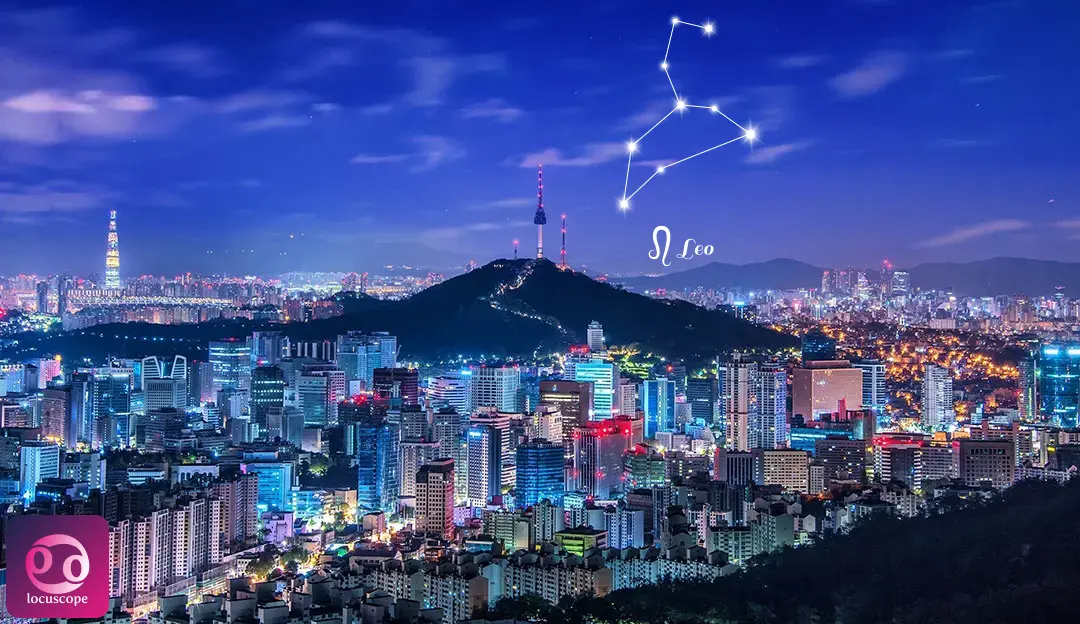
狮子座
August 15, 1945
This date is celebrated as Gwangbokjeol (National Liberation Day). It marks the day in 1945 when Korea was liberated from 35 years of Japanese colonial rule at the end of World War II, an event which paved the way for the establishment of the Republic of Korea.
地点
South Korea 本周能量
发现本周有哪些能量正在影响这个地方
以前的能量
探索过往每周能量与宇宙影响
个性档案
Though we mark August 15, 1945, as its modern rebirth, the Korean peninsula carries five millennia of civilization. This land has never been a quiet place. A peninsula wedged between the continental power of China, the maritime empire of Japan, and the looming presence of Russia, its geography is its destiny. It is a bridge, a buffer, and a battlefield. This precarious position has forged a people of almost impossible resilience, a personality defined by a fierce, stubborn, and sometimes tragic pride.
This is the land of the Silla, Goryeo, and Joseon dynasties, a civilization with its own unique language, its own alphabet (Hangeul), and its own profound philosophical traditions. This deep, ancient identity is precisely what makes its 20th-century history so painful. The birth date of Gwangbokjeol ("The Day the Light Returned") is not a celebration of a new creation, but a restoration. It marks the end of 35 years of brutal Japanese colonial rule, a period aimed at the systematic erasure of Korean culture itself.
This liberation was not a clean slate. It was immediately followed by a devastating ideological division and the Korean War, which tore the "restored" nation in half. The Republic of Korea, the southern half, was born from these ashes. Its modern character is a dramatic, high-speed reaction to this trauma. It is defined by han-a uniquely Korean concept of collective, unresolved sorrow and resentment-and ppalli-ppalli ("hurry, hurry!"), the relentless, frantic energy that drove the "Miracle on the Han River."
In just two generations, South Korea willed itself from one of the poorest countries on Earth into a global powerhouse of technology (Samsung, Hyundai) and culture. The global phenomenon of K-Pop and Korean cinema is not just entertainment; it is the polished, perfected, and victorious expression of a nation that was told it would be erased, and instead, chose to take center stage.
标签
在 South Korea 内探索
发现 South Korea 内的地点及其占星档案
神秘灵魂
Archetype: The Resurrected Star. The Fiery Performer. The Impatient Survivor.
Born on August 15th, South Korea is a Leo. And this is, perhaps, the most profound astrological placement in the modern world. Leo is the sign ruled by the Sun, the sign of royalty, pride, and the need for the spotlight. Its national birth date is Gwangbokjeol-"The Day the Light Returned." Its entire story is a Leo's fight to get its light (the Sun) back after 35 years of total darkness.
This is a Leo that was humiliated, its pride shattered, and its identity suppressed. A wounded Leo does not just survive; it plots a comeback of such spectacular proportions that the world has no choice but to applaud. The entire "Miracle on the Han River" is a Leo performance. The need to be #1-in technology, in education, in culture-is pure Leo.
The Korean War, which split it in two, only added fuel to this solar fire. It gave South Korea a permanent rival (its northern twin), a mirror against which to measure its own success. K-Pop is the ultimate expression of this: a hyper-polished, globally dominant, relentlessly perfected art form. It is a Leo demanding-and getting-the global stage.
If South Korea were a person, she’s the trainee who became the CEO. She sleeps four hours a night and is a perfectionist who expects you to be one too. She is all about performance-her outfit, her apartment, her career are all flawless. She’ll treat you to the most expensive meal (and pay), but she’s secretly judging your table manners. She is fiercely, passionately loyal to her family (jeong) but has a deep, simmering rage (han) against those who wronged her ancestors. She is obsessed with 'winning'-in tech, in film, in music. She needs the world's applause because, for a long time, she was told she didn't deserve a voice.