Algiers 摩羯座
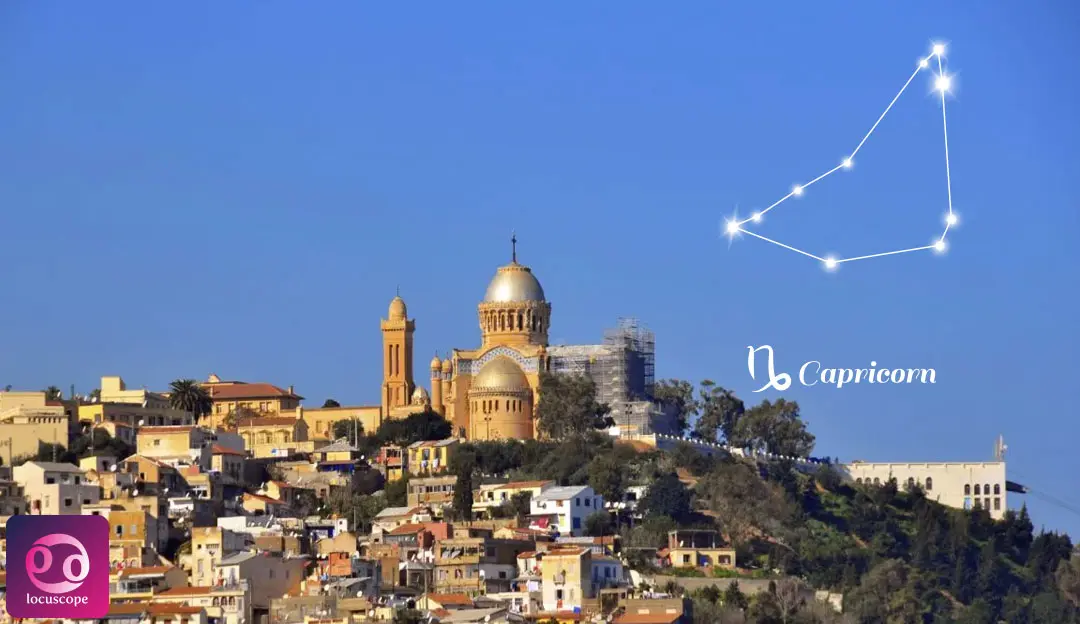
摩羯座
January 1, 0960
We accept this date as the birthday because it symbolically represents the year the city was re-founded by Buluggin ibn Ziri on the ruins of the ancient Roman city of Icosium, marking the birth of modern Algiers.
地点
Algiers 本周能量
发现本周有哪些能量正在影响这个地方
以前的能量
探索过往每周能量与宇宙影响
个性档案
Though we mark January 1, 960, as the birth of the city we know today, the limestone ridges overlooking this bay have watched empires rise and fall like tides for millennia. Algiers, 'Al-Bahja' (The Joyous), or 'La Blanche' (The White), is a city of layers, where history is not horizontal but vertical, stacking era upon era. While the Phoenicians established a trading post and the Romans built Icosium, it was the Ziri dynasty, under Buluggin ibn Ziri, that truly forged the identity of Algiers on this date. By refounding the city on the ruins of the ancients, he created a distinct Maghrebi capital that would become the impregnable fortress of the Mediterranean.
The geography of Algiers is theatrical. The city forms a vast amphitheater, its white buildings cascading down the steep hills toward the sapphire sea, as if the architecture itself is leaning in to watch the drama of the port. This verticality defined its defense; for centuries, the Casbah-the old citadel-was a labyrinth that confused and repelled invaders, from Spanish armadas to French colonizers. The founding date in the mid-10th century places Algiers squarely in a time of Islamic golden age consolidation, rooting its character in a deep sense of heritage, privacy, and faith.
In the modern era, Algiers remains a city of intense dignity and complexity. It is not a playground for tourists; it is a serious metropolis that holds its secrets close. The War of Independence against France is etched into the psyche of the streets, particularly in the winding alleys of the Casbah, where the battle for sovereignty was most fierce. Culturally, the city breathes through Chaabi music-a melancholic, mandole-driven sound that speaks of love, loss, and the sea. The modern Algerois is a product of this history: proud, politically engaged, and fiercely protective of their home. The city stands as a white sentinel, watching the northern horizon, carrying the weight of ten centuries with a stoic grace.
标签
神秘灵魂
Archetype: The White Fortress. The Silent Guardian. The Unconquerable Cliff.
Born on January 1st, Algiers is the ultimate Capricorn. This is the sign of structure, history, endurance, and mountains-fitting for a city built into the steep hills, known for its formidable defenses. Capricorns are ruled by Saturn, the planet of time and karma, which explains the city's obsession with memory and its sometimes stern, serious demeanor. This is not a flighty city; it is 'Al-Mahroussa' (The Well-Guarded). The Capricorn energy manifests in the city's ability to withstand siege and occupation while keeping its inner core-the Casbah-intact. It respects tradition, hierarchy, and resilience above all else.
If Algiers were a person: He is an older man with silver hair and a spine of steel, sitting at a cafe table overlooking the harbor. He wears a crisp white shirt and a vintage jacket that has seen better days but is immaculately pressed. He drinks his coffee slowly, his eyes scanning the horizon with the focus of a hawk. He does not smile easily, and he does not suffer fools. If you ask him a question, he might answer with a proverb or a long silence. He carries a heavy key in his pocket-the key to an old house in the upper city that has been in his family for twenty generations. He is deeply hospitable but incredibly private; he will give you his dinner, but he will never tell you his secrets. He demands respect, not attention. He is the rock against which the waves break.